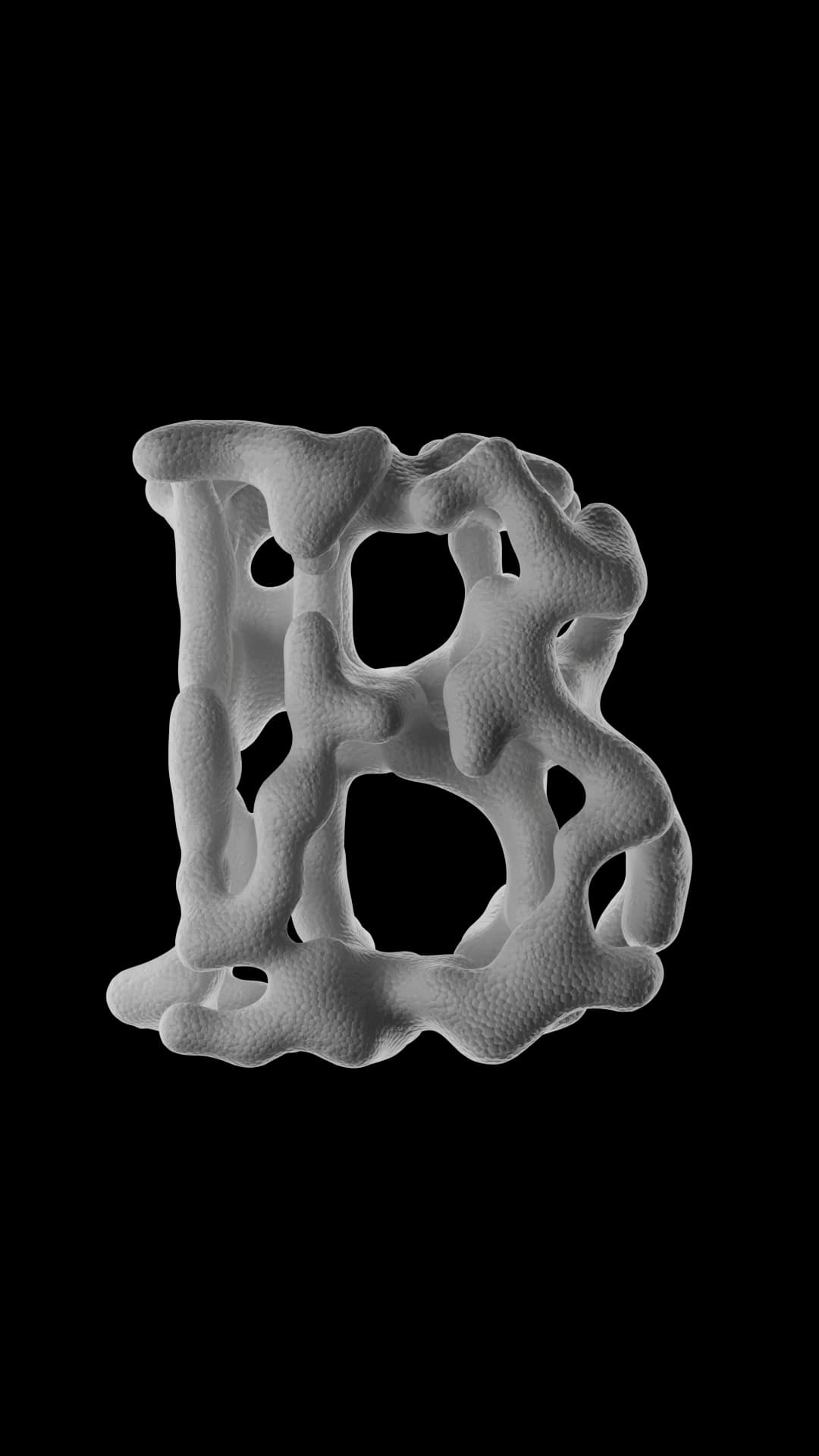
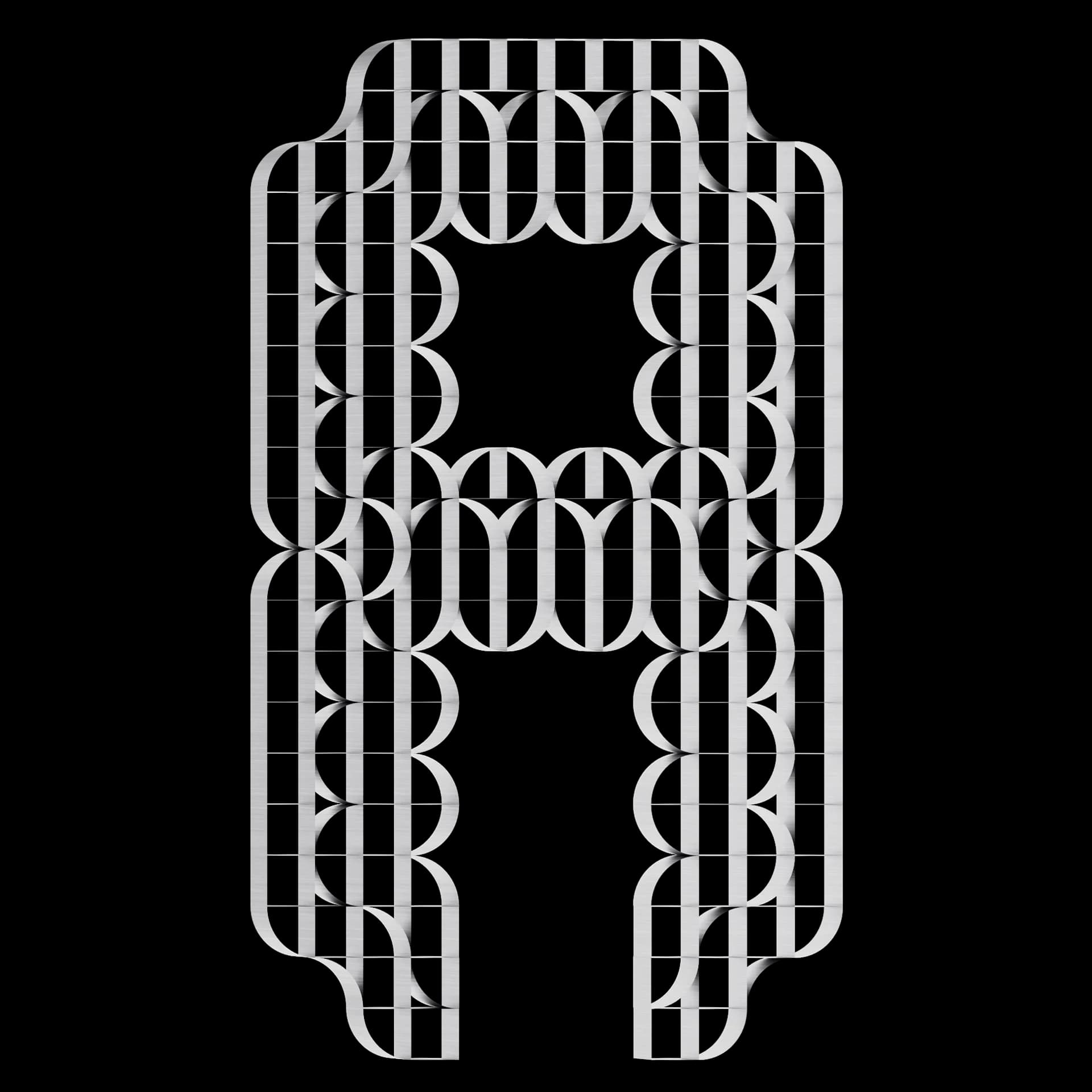
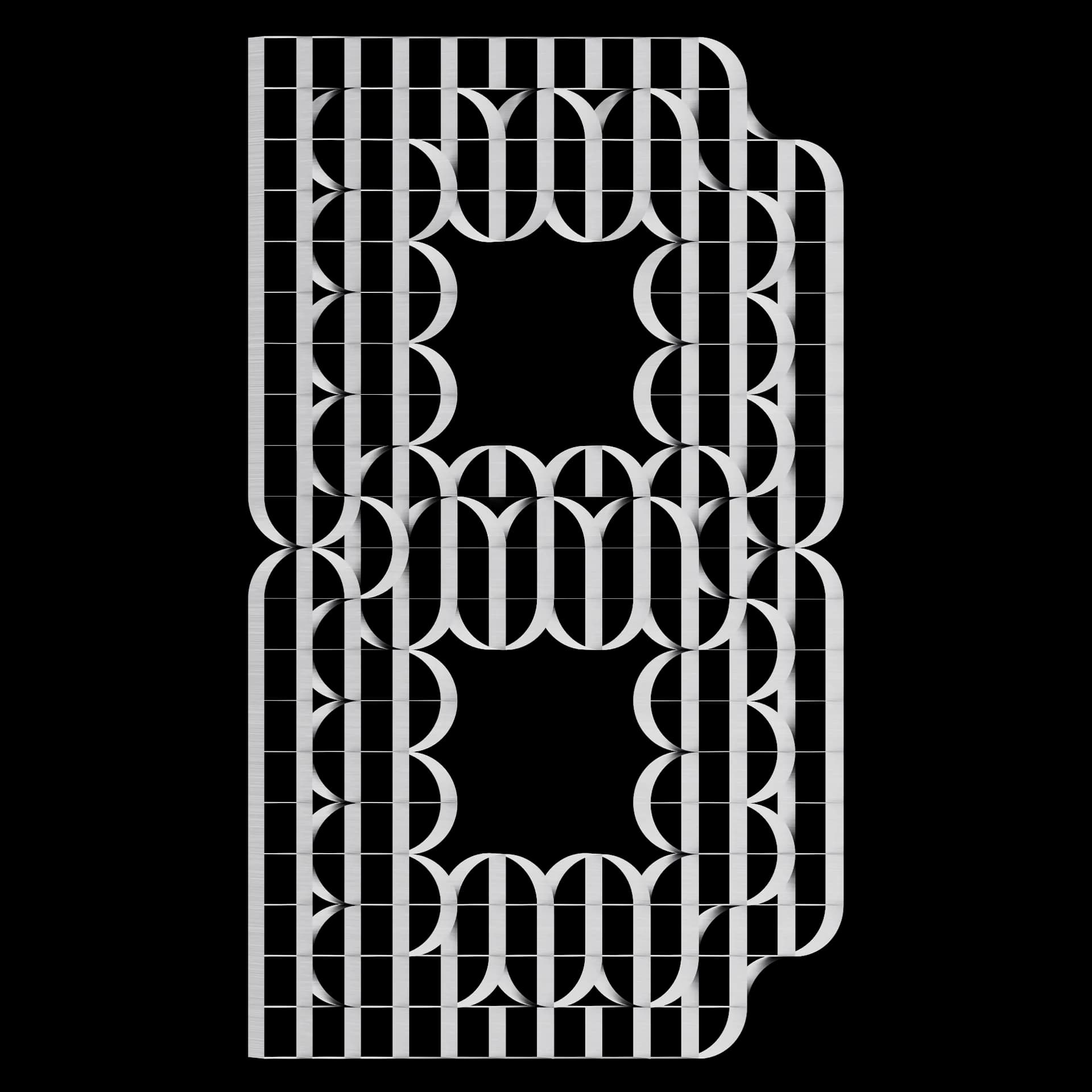
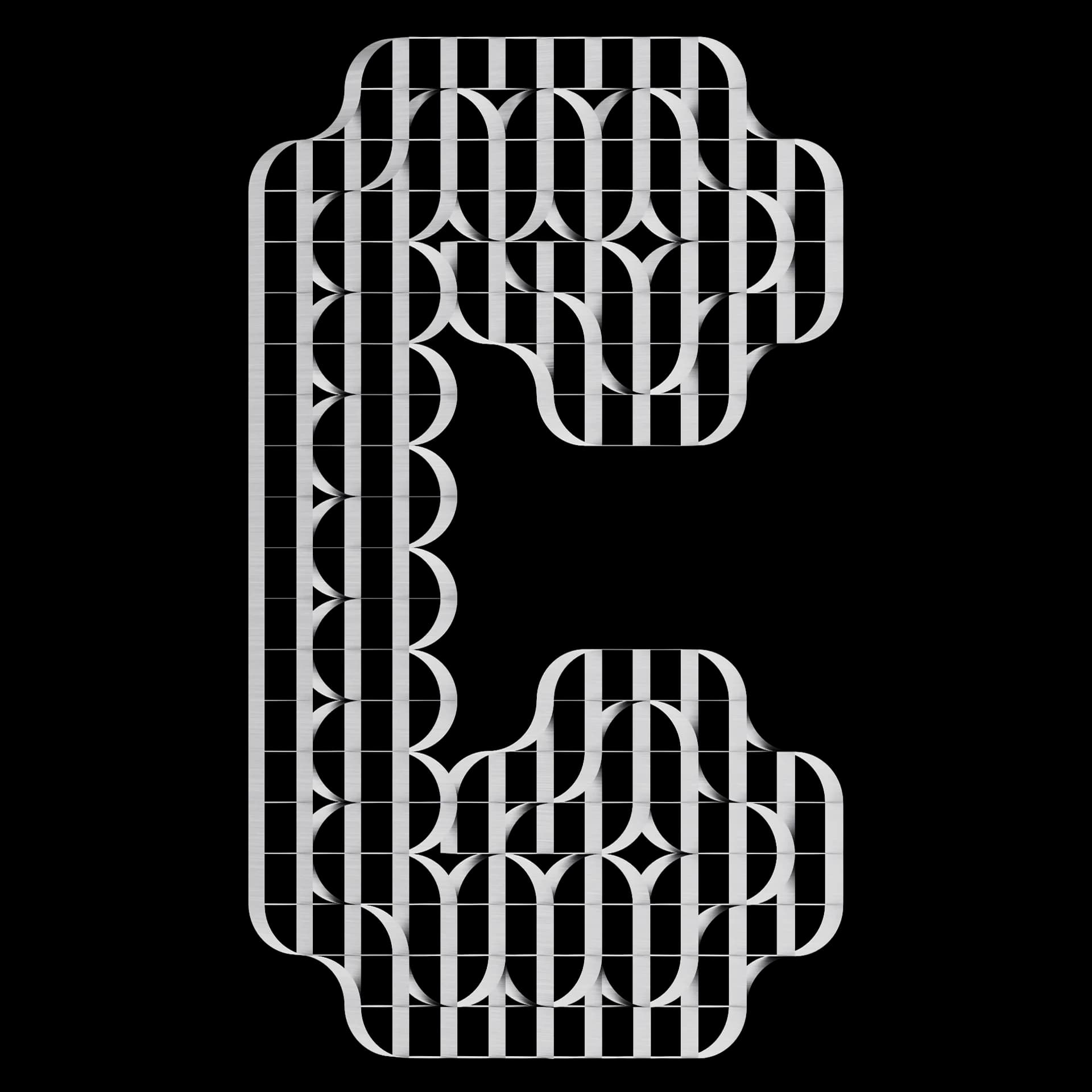
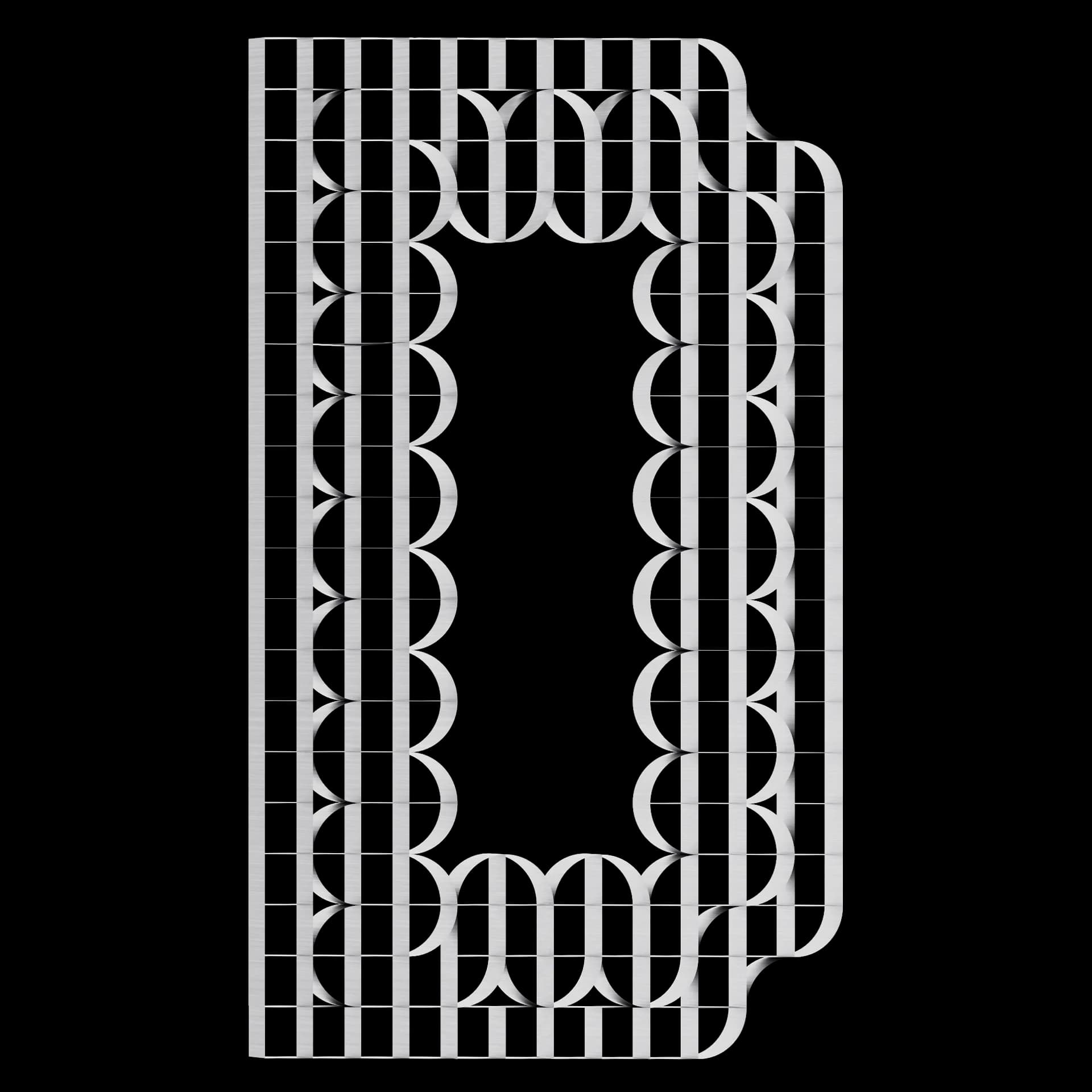
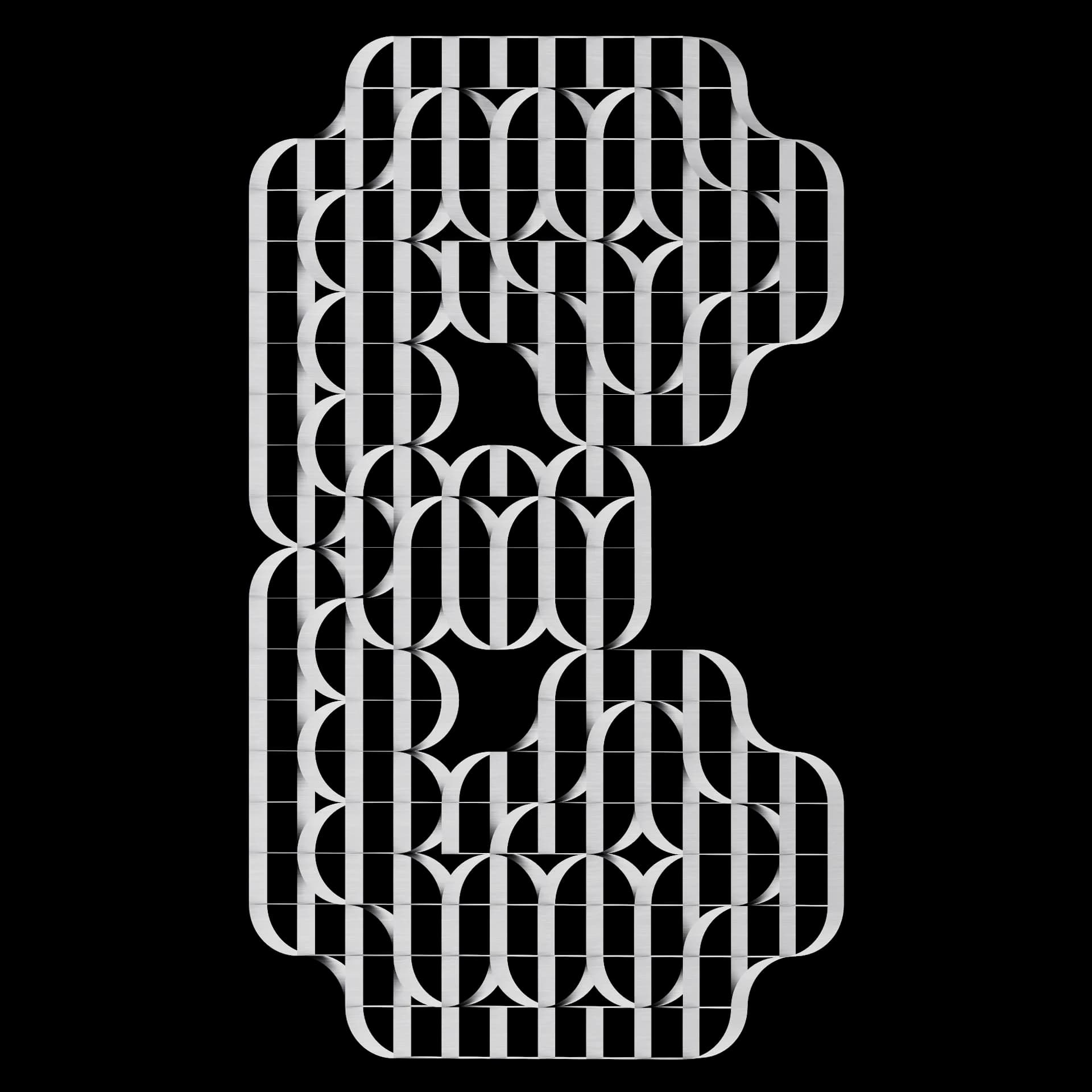
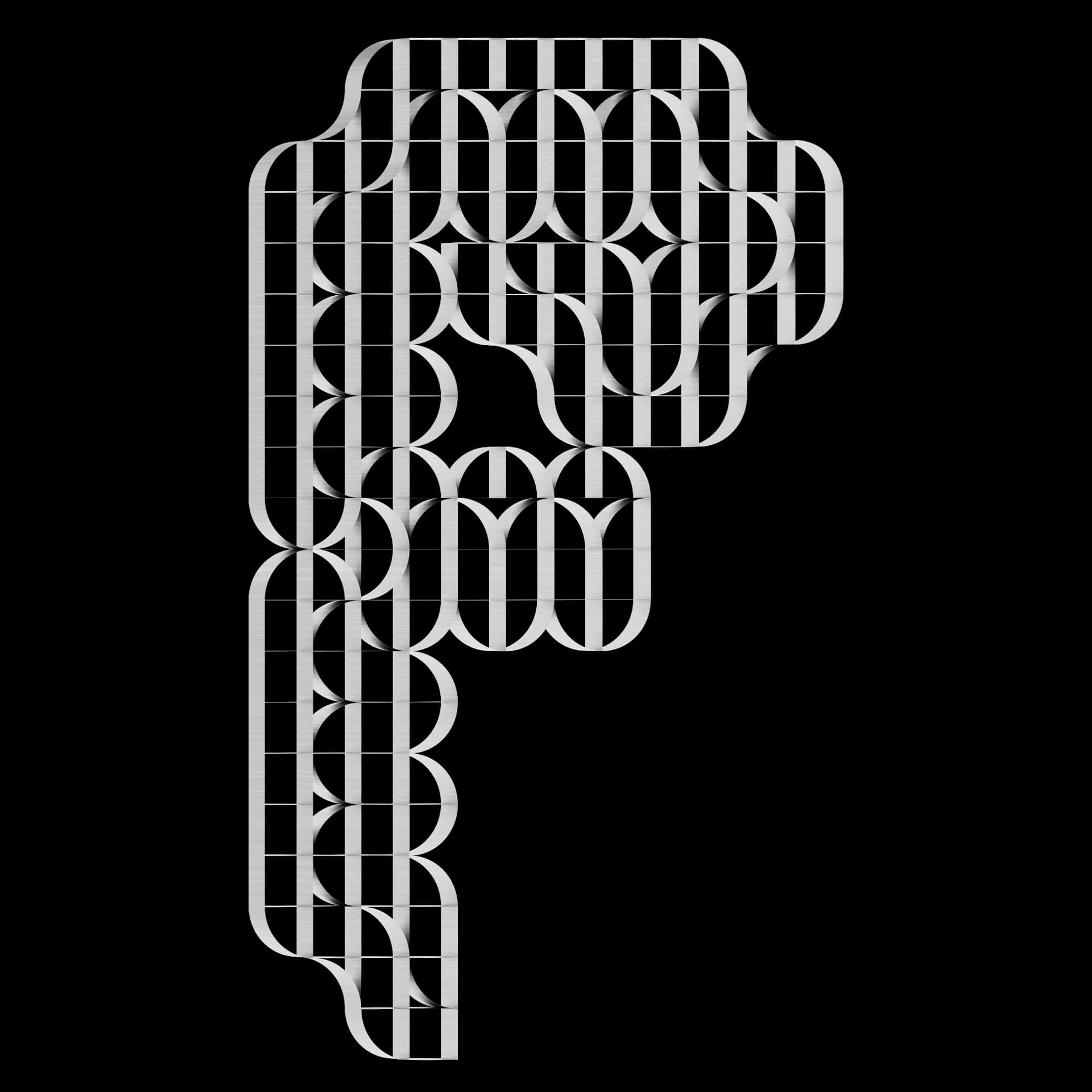
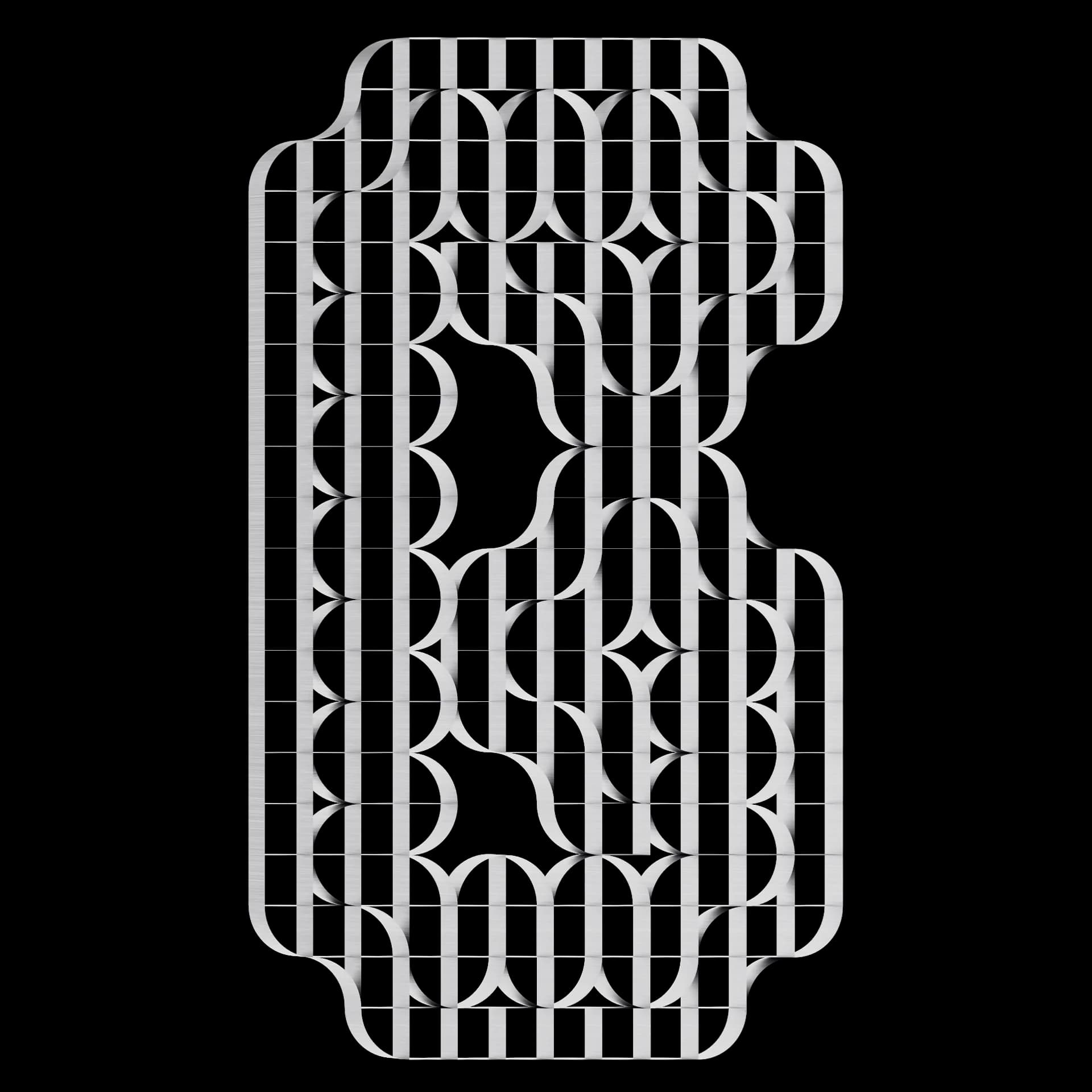
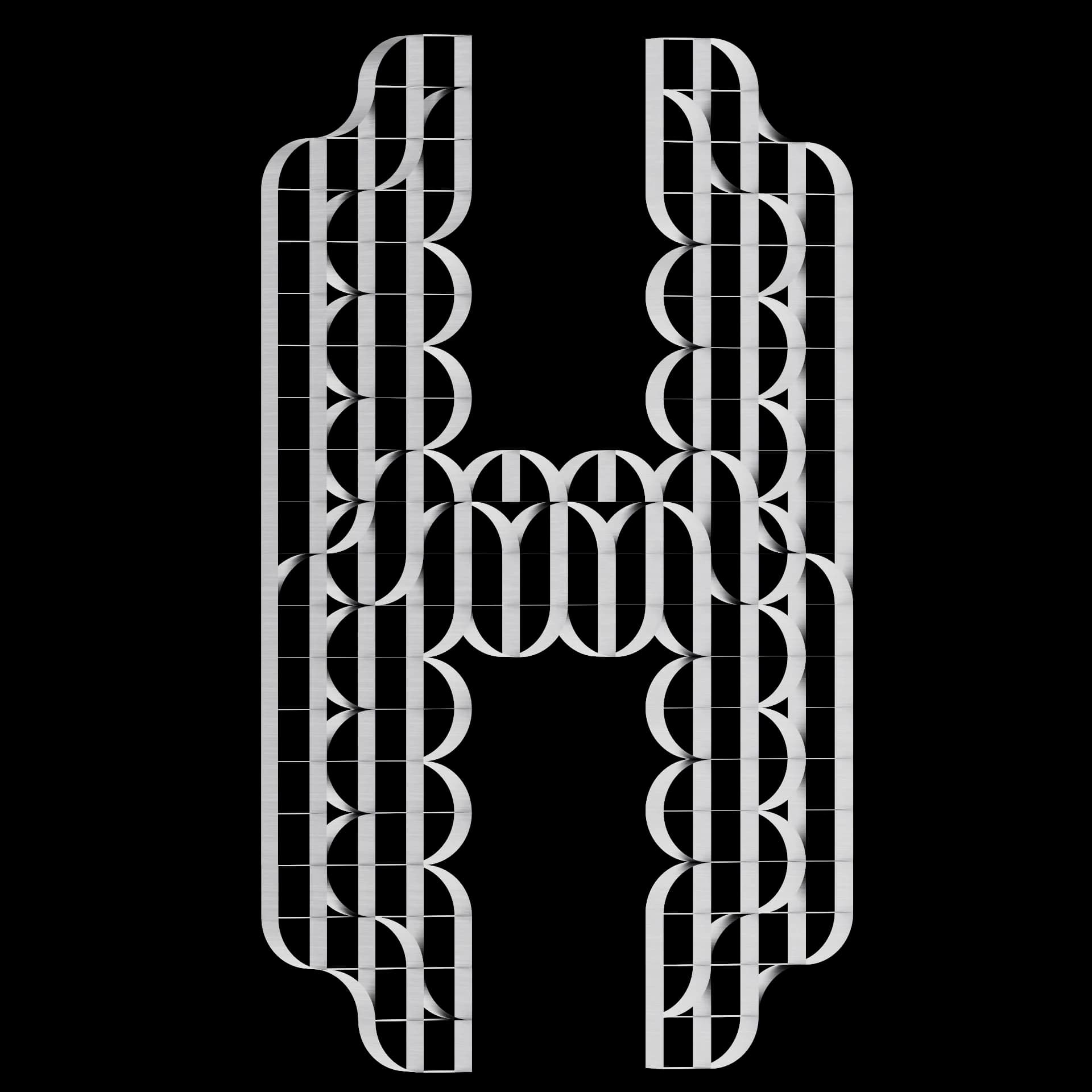
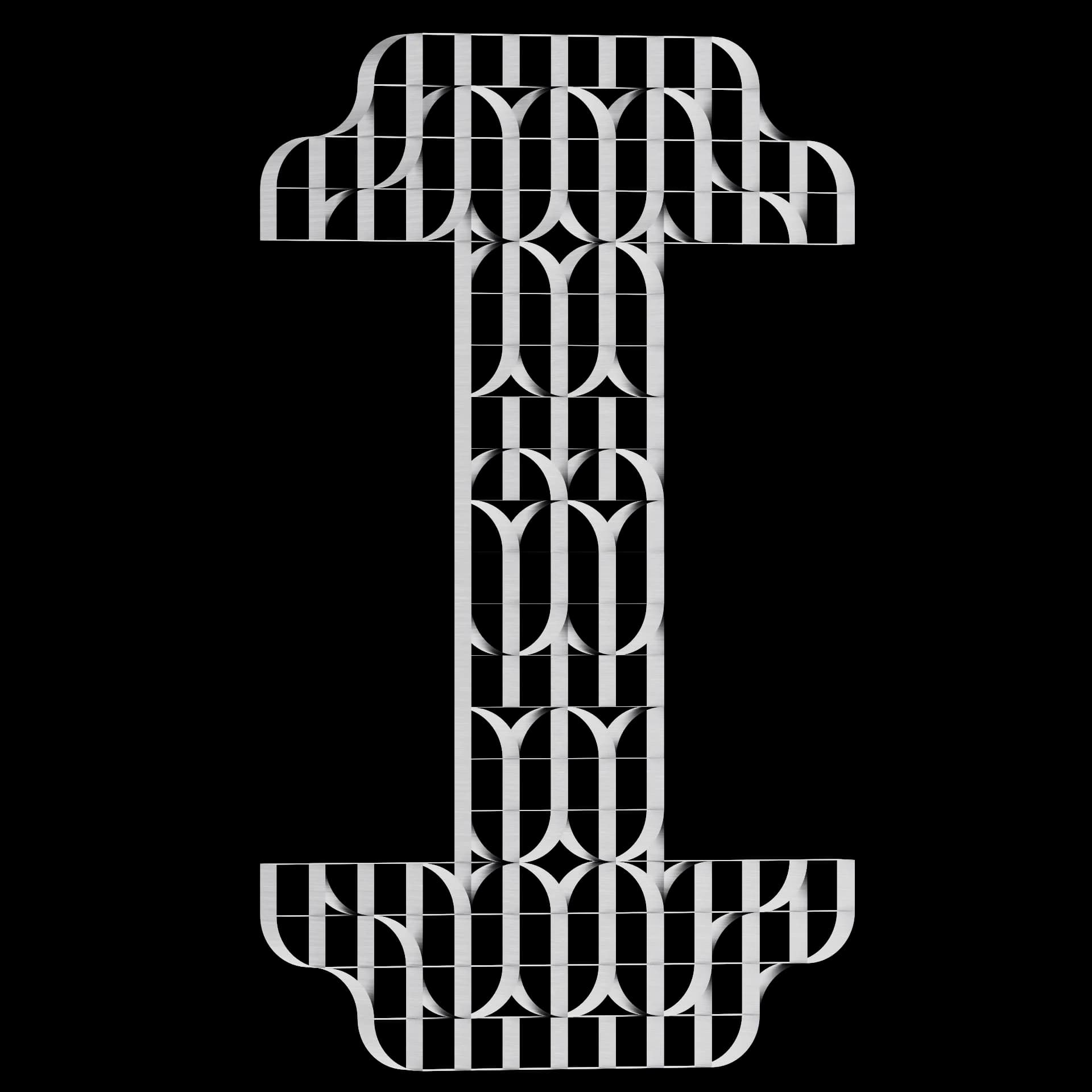
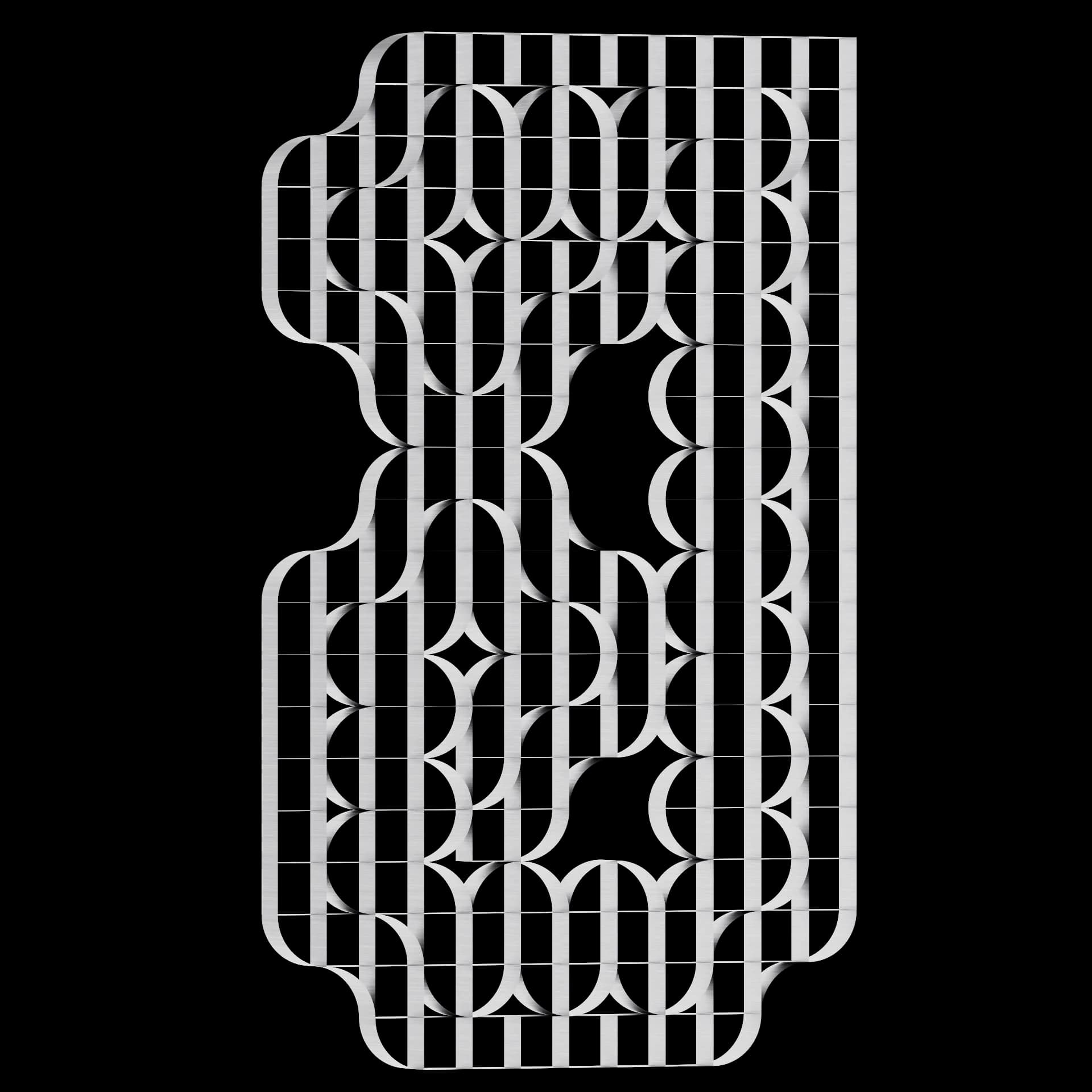
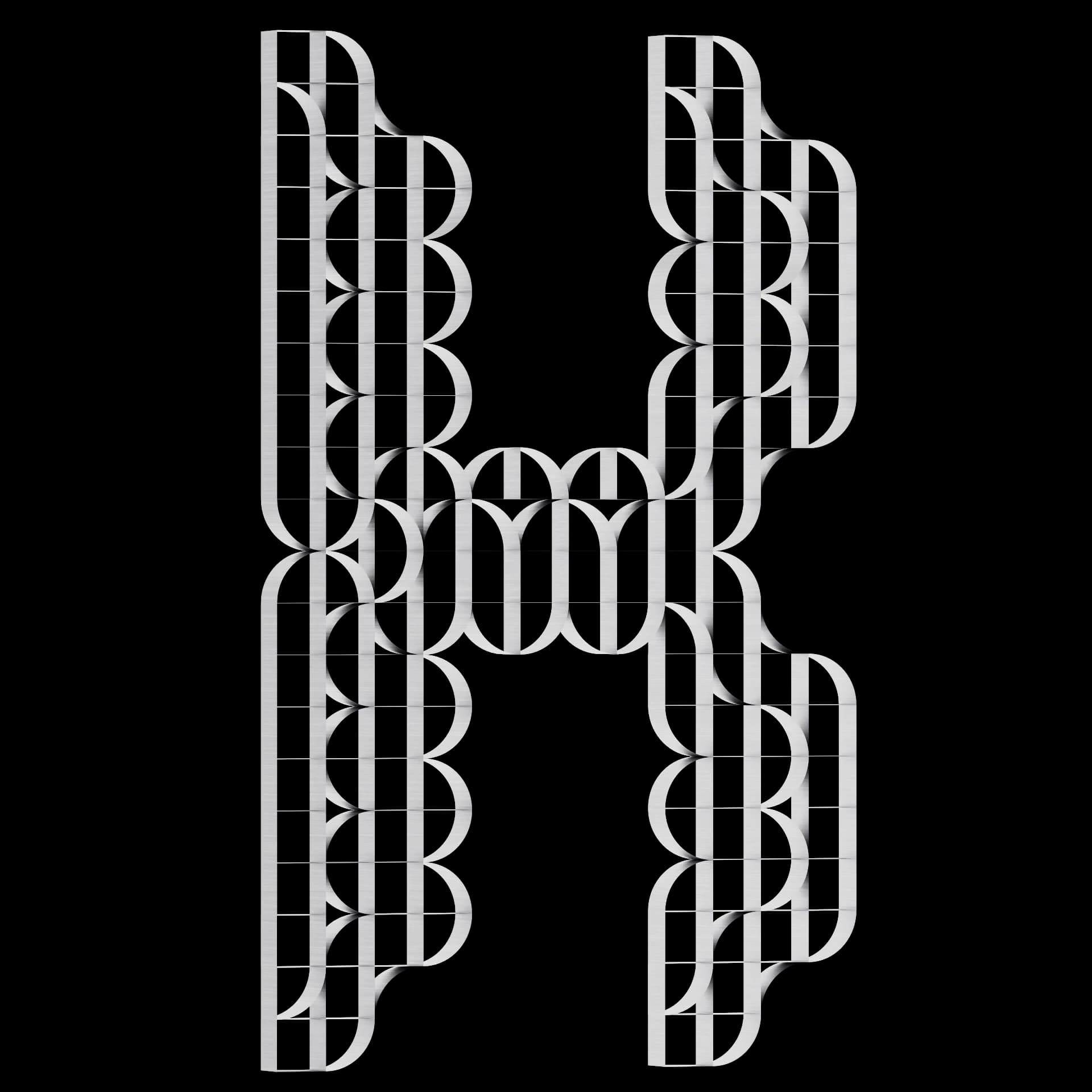
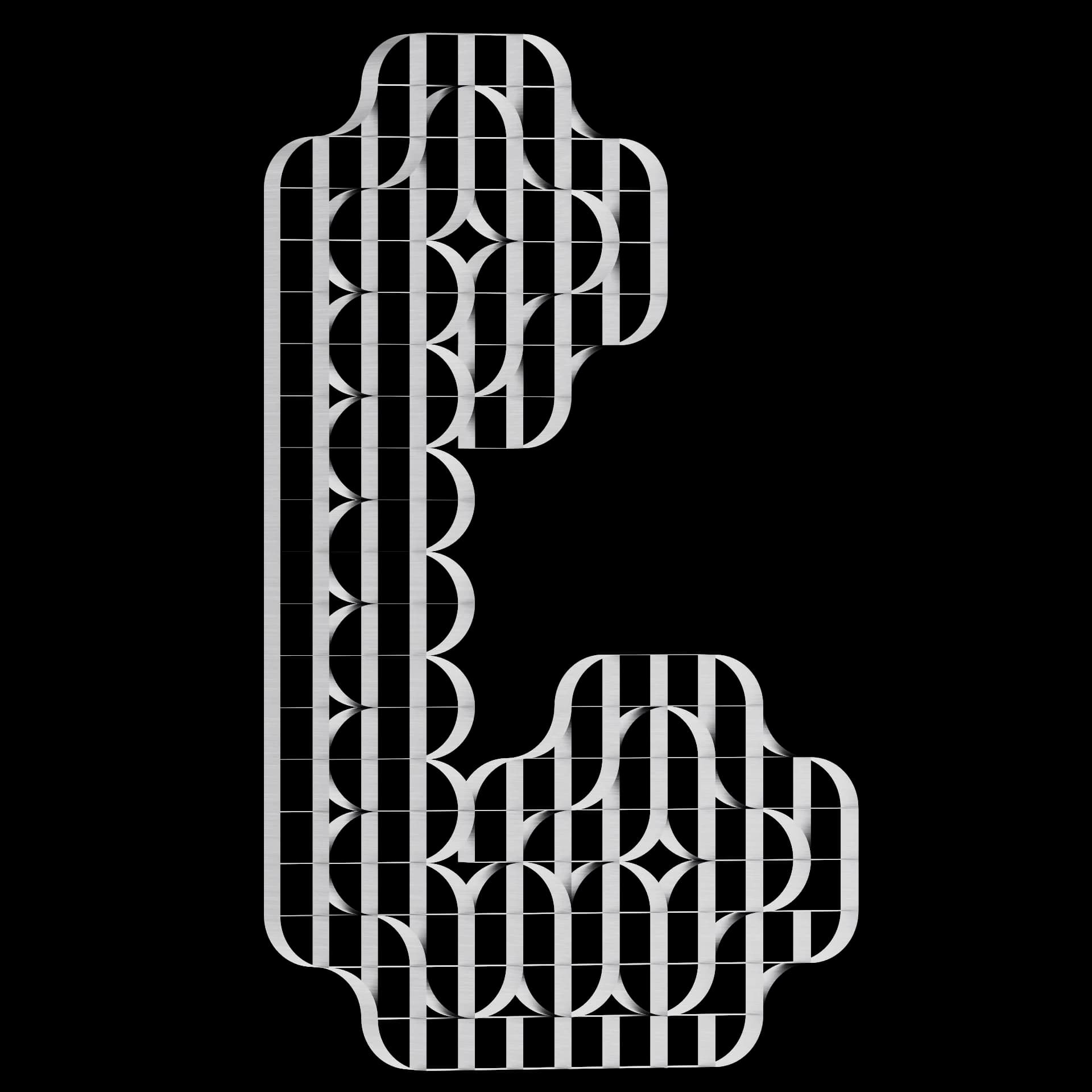
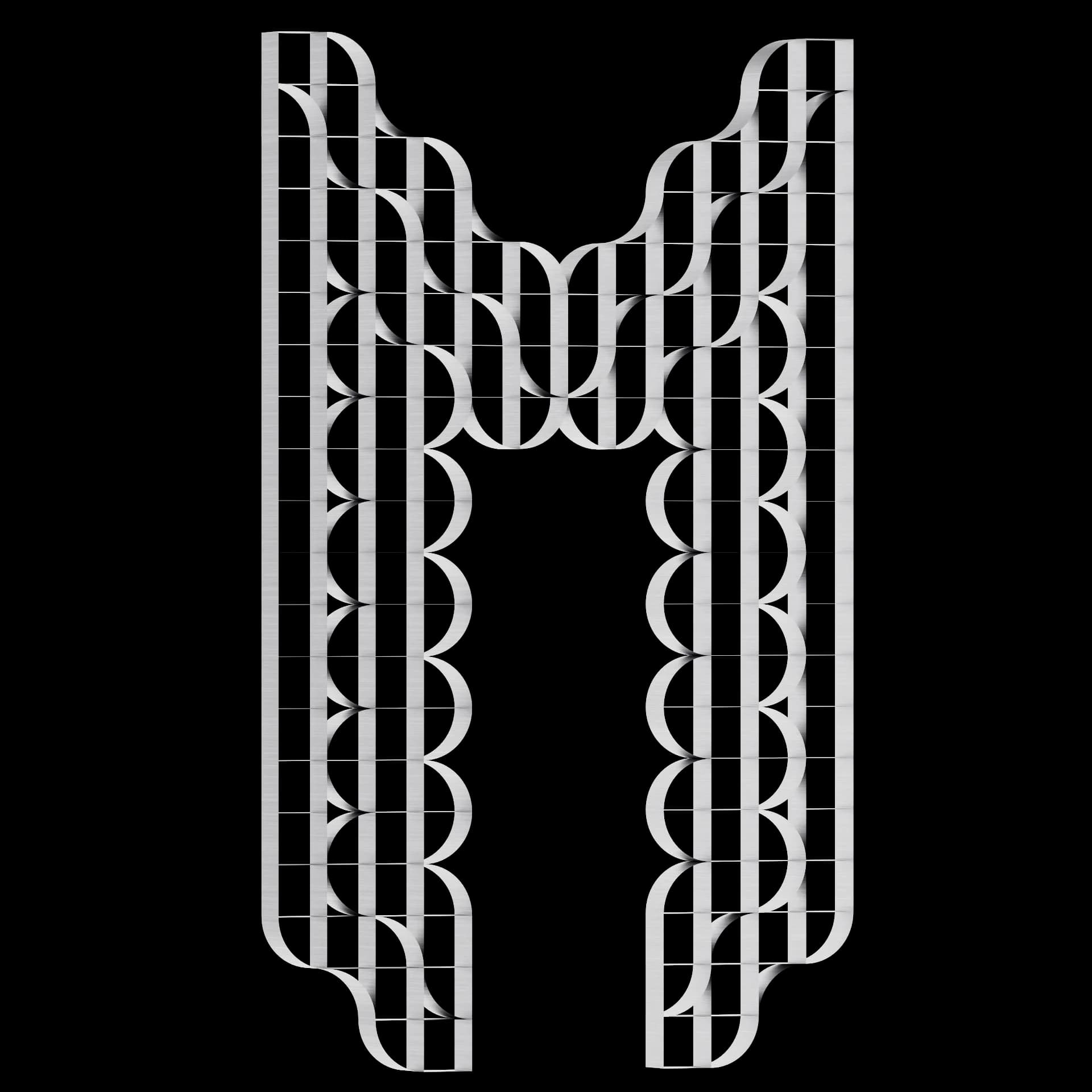
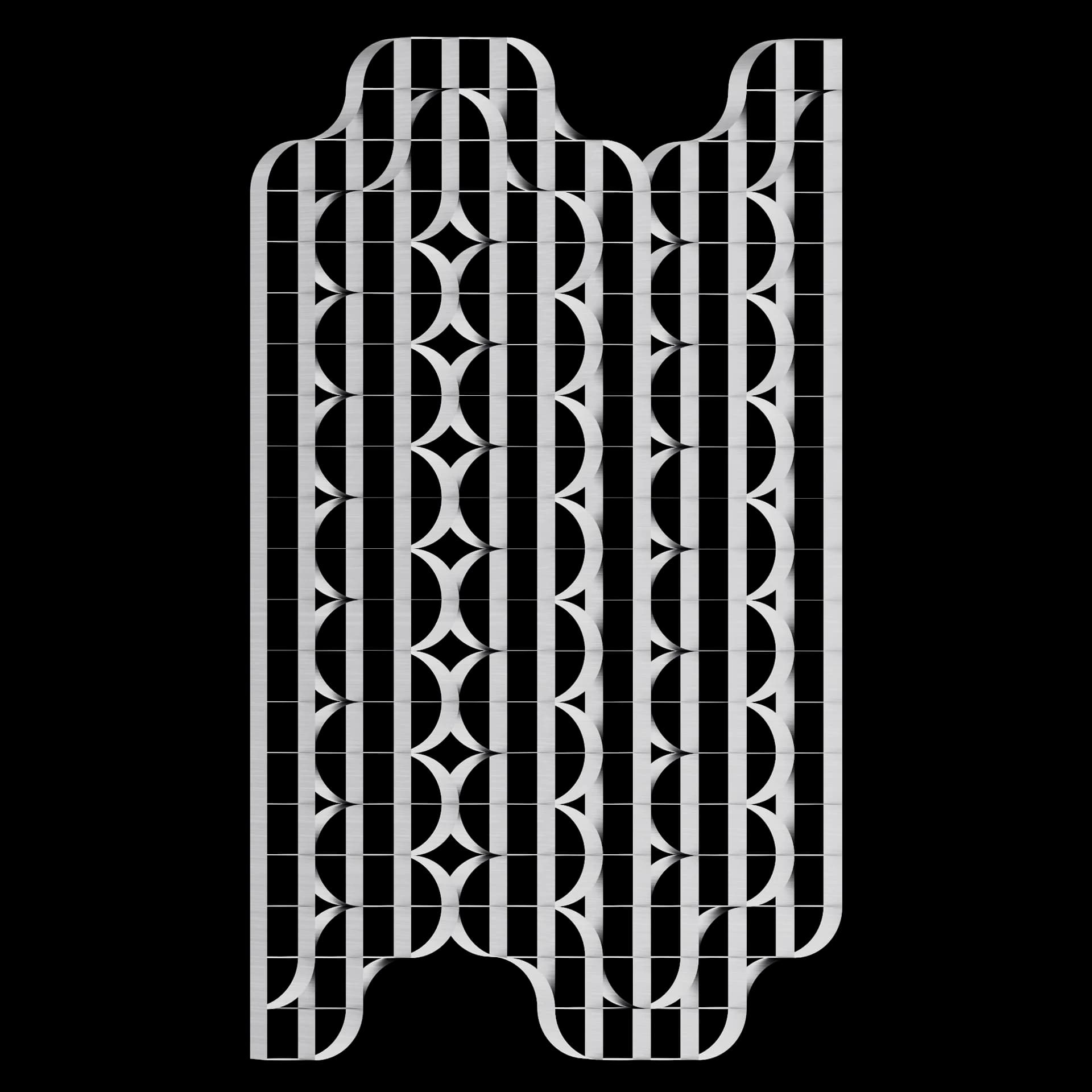
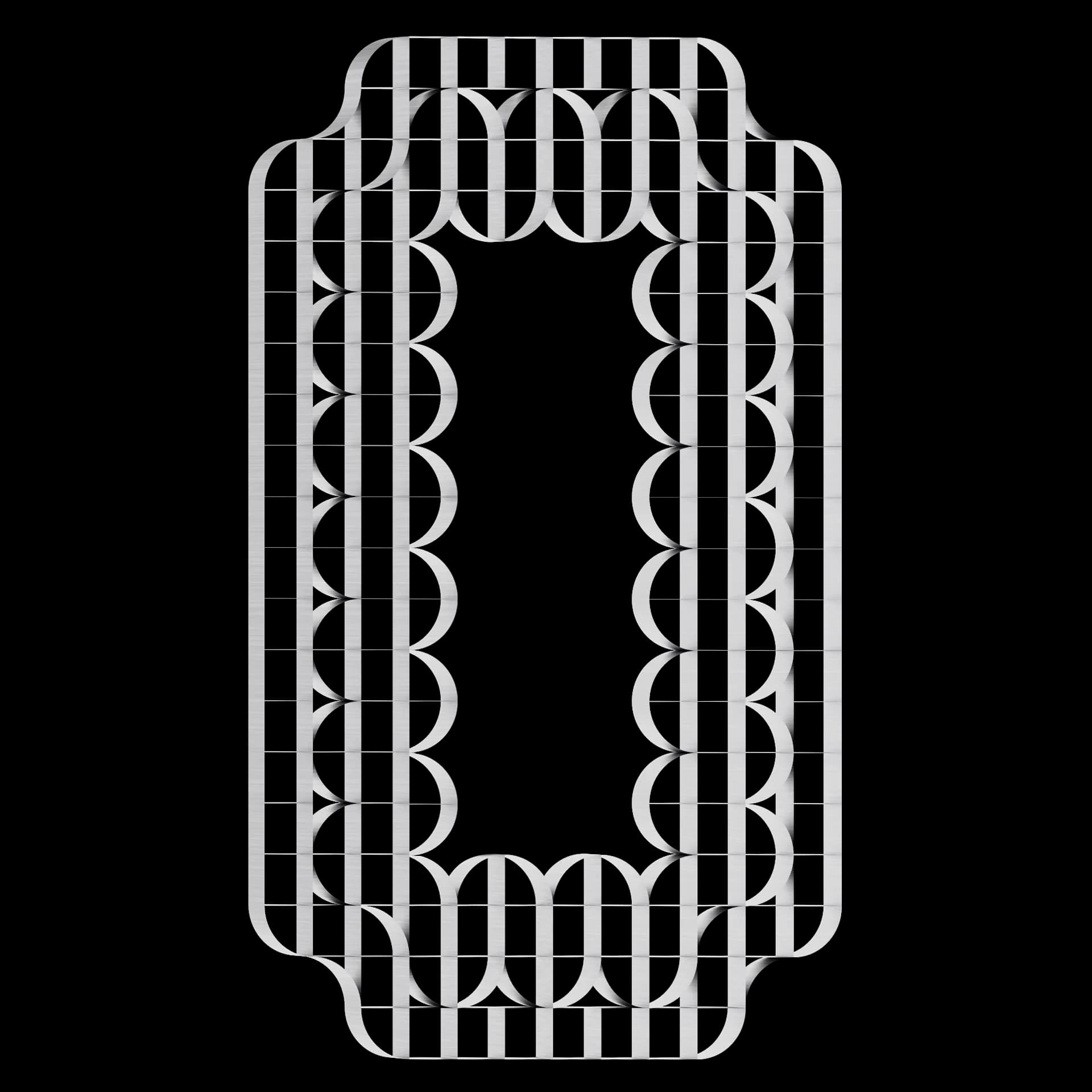
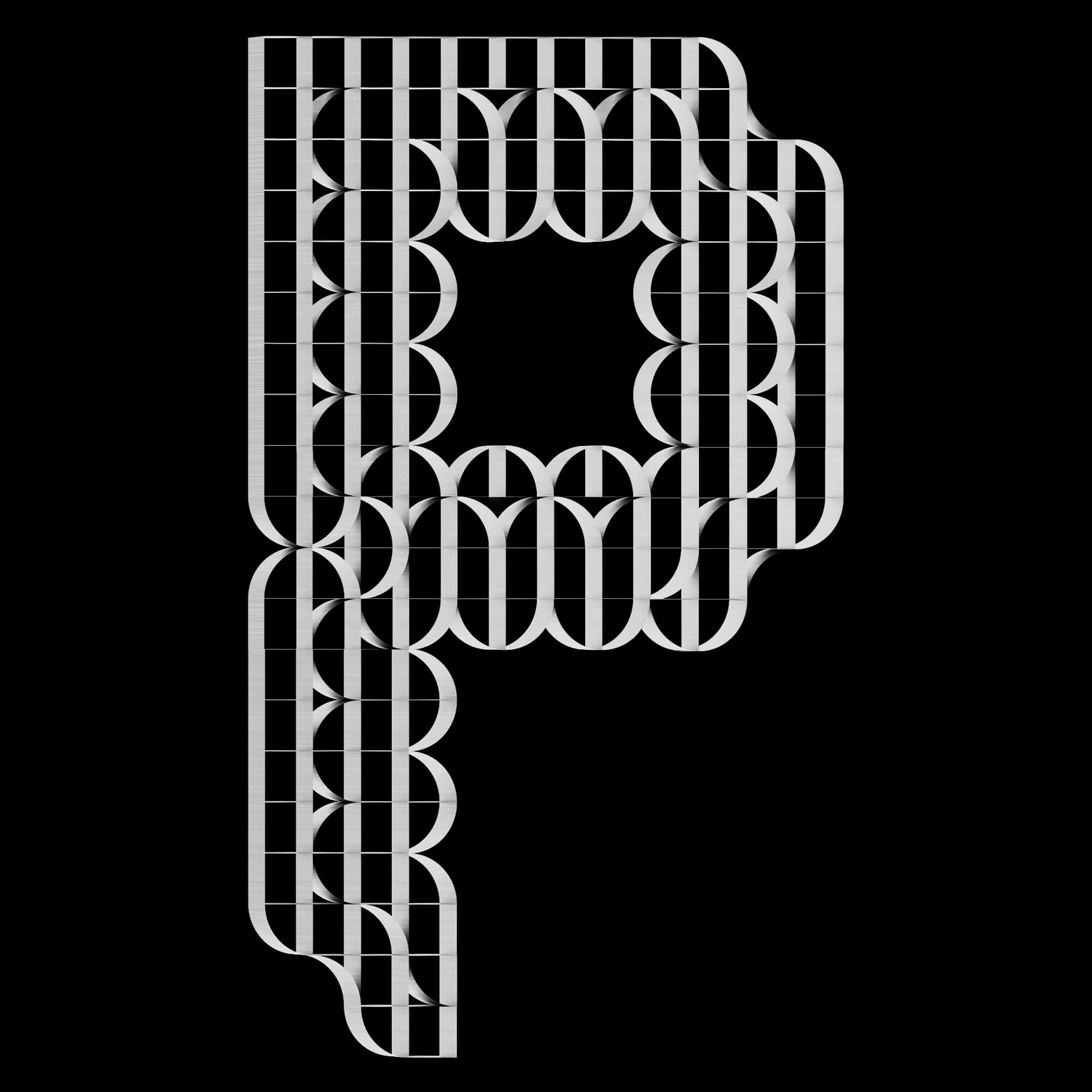
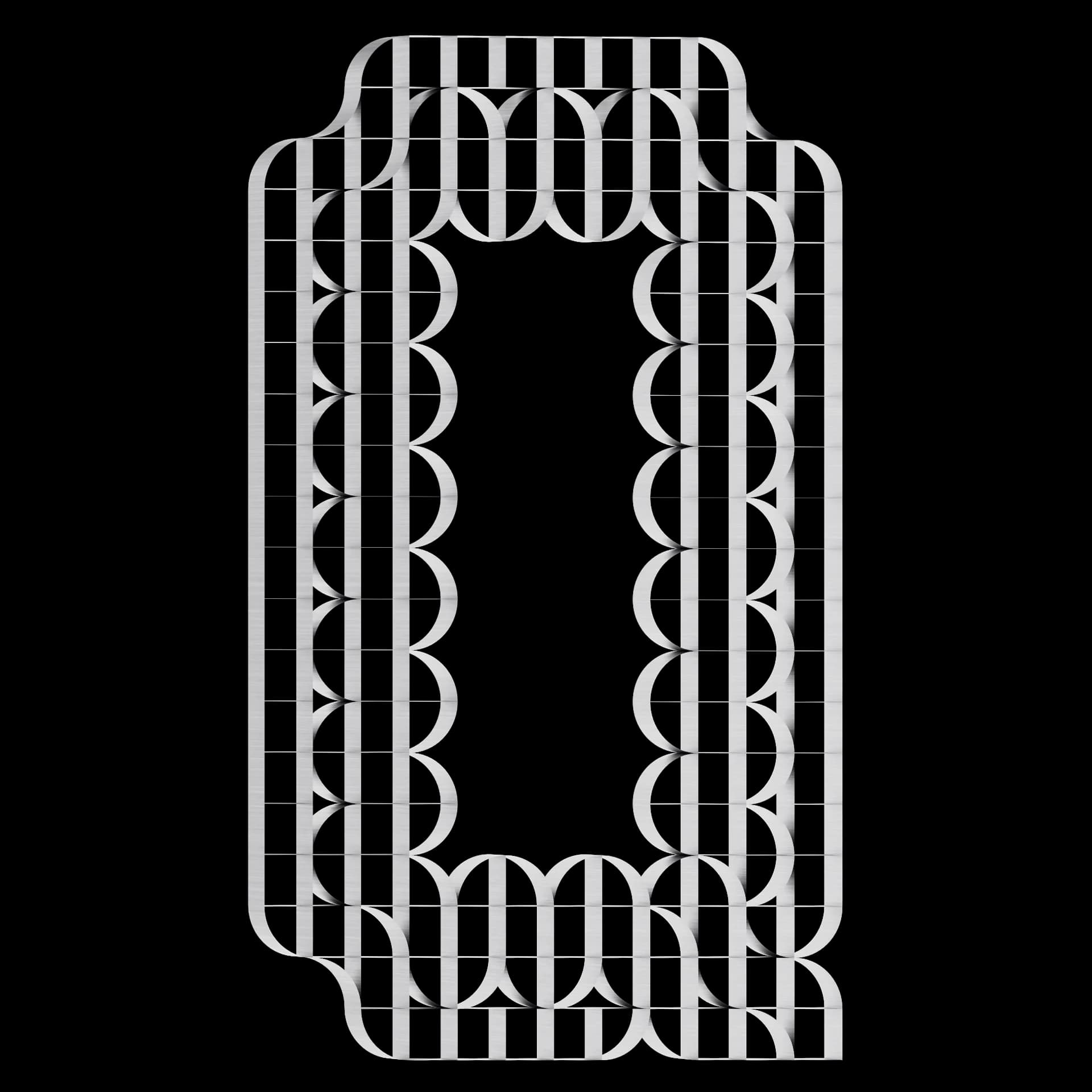
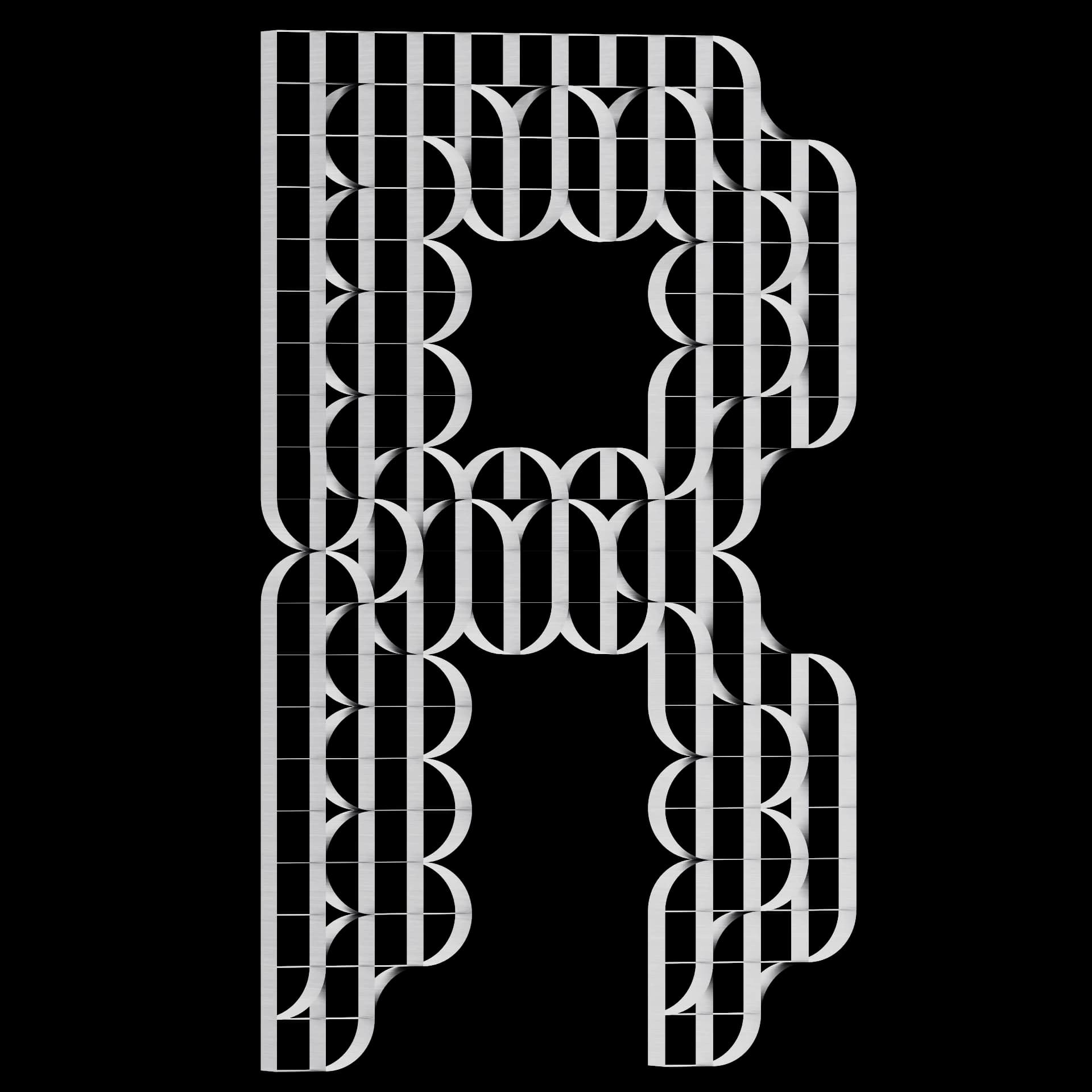
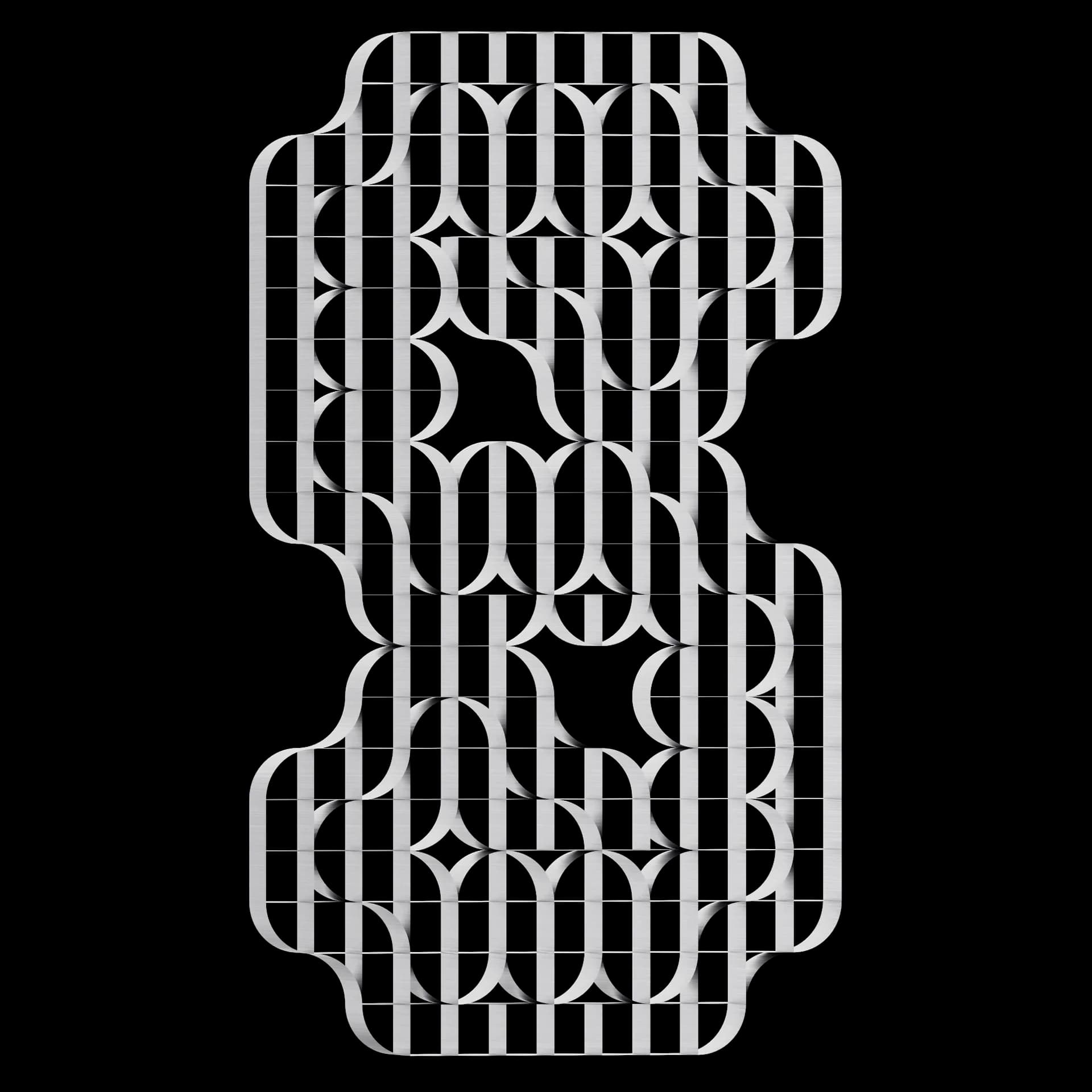
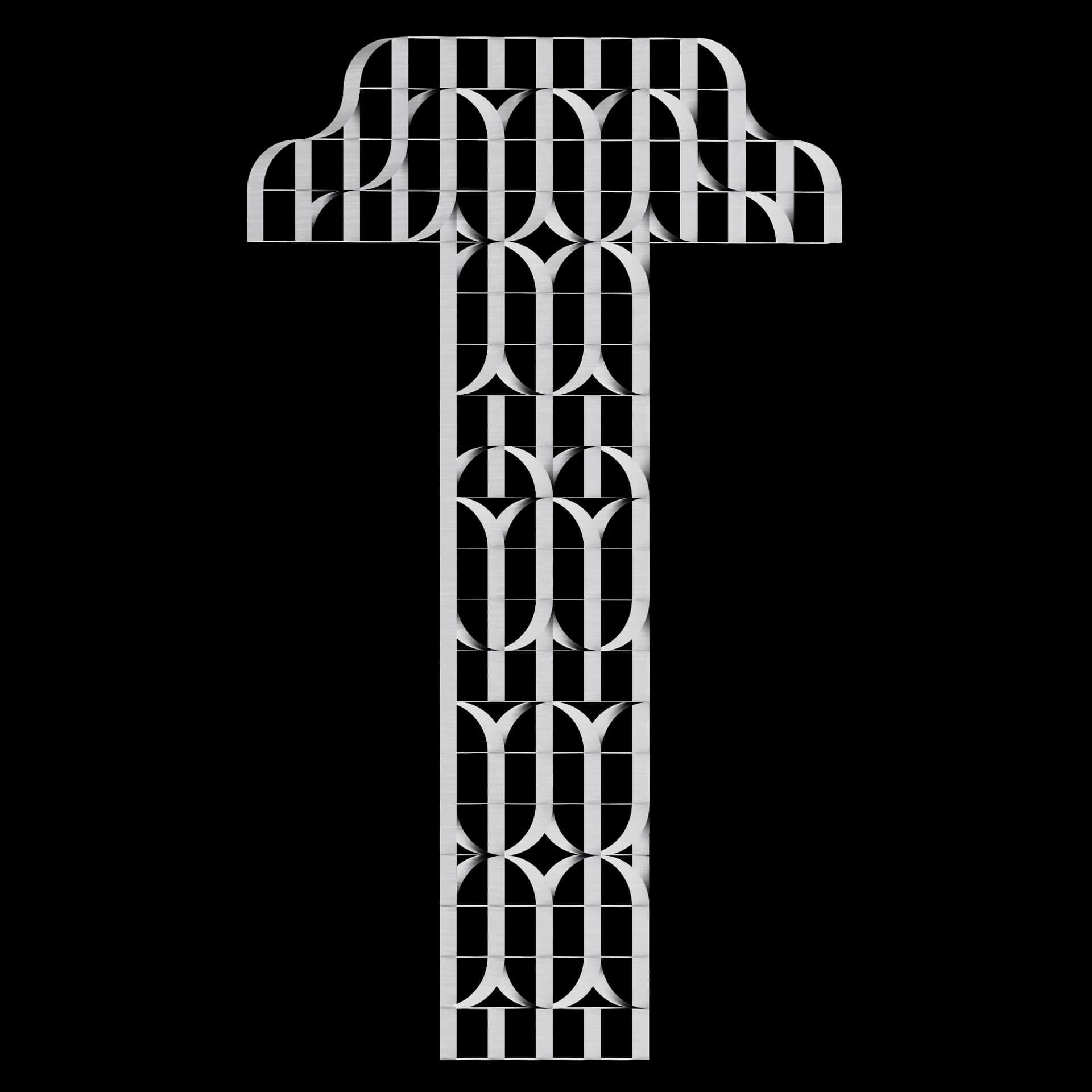
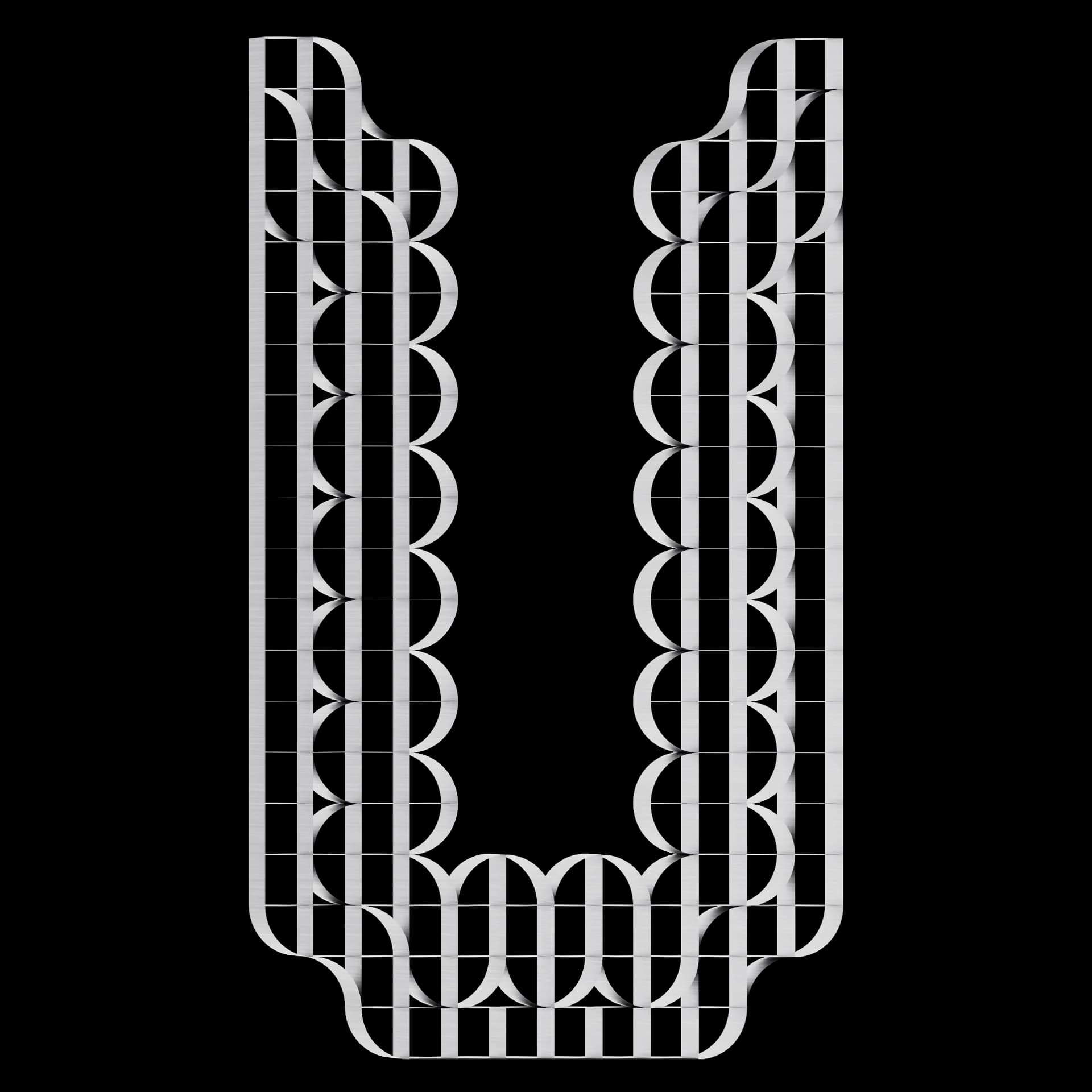
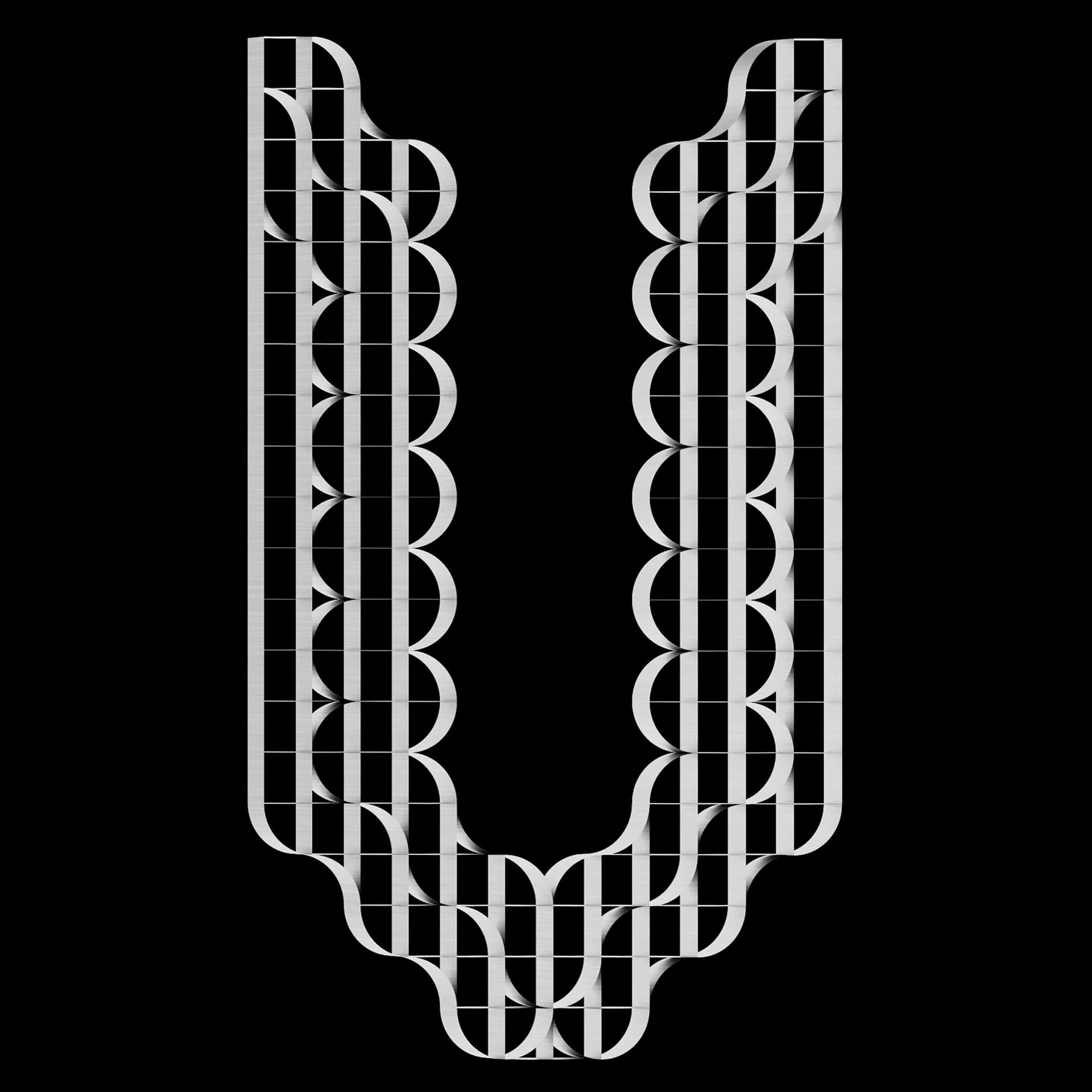
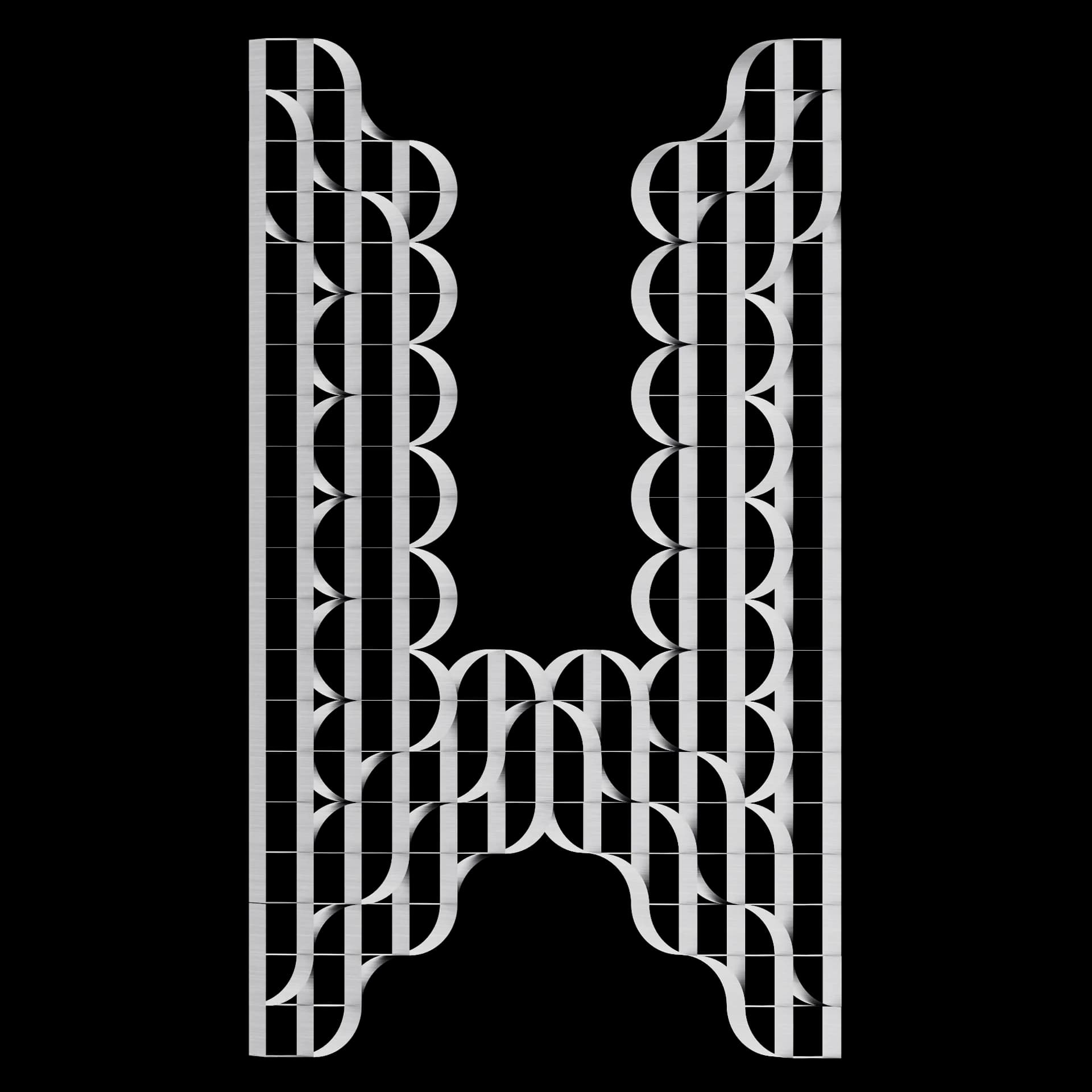
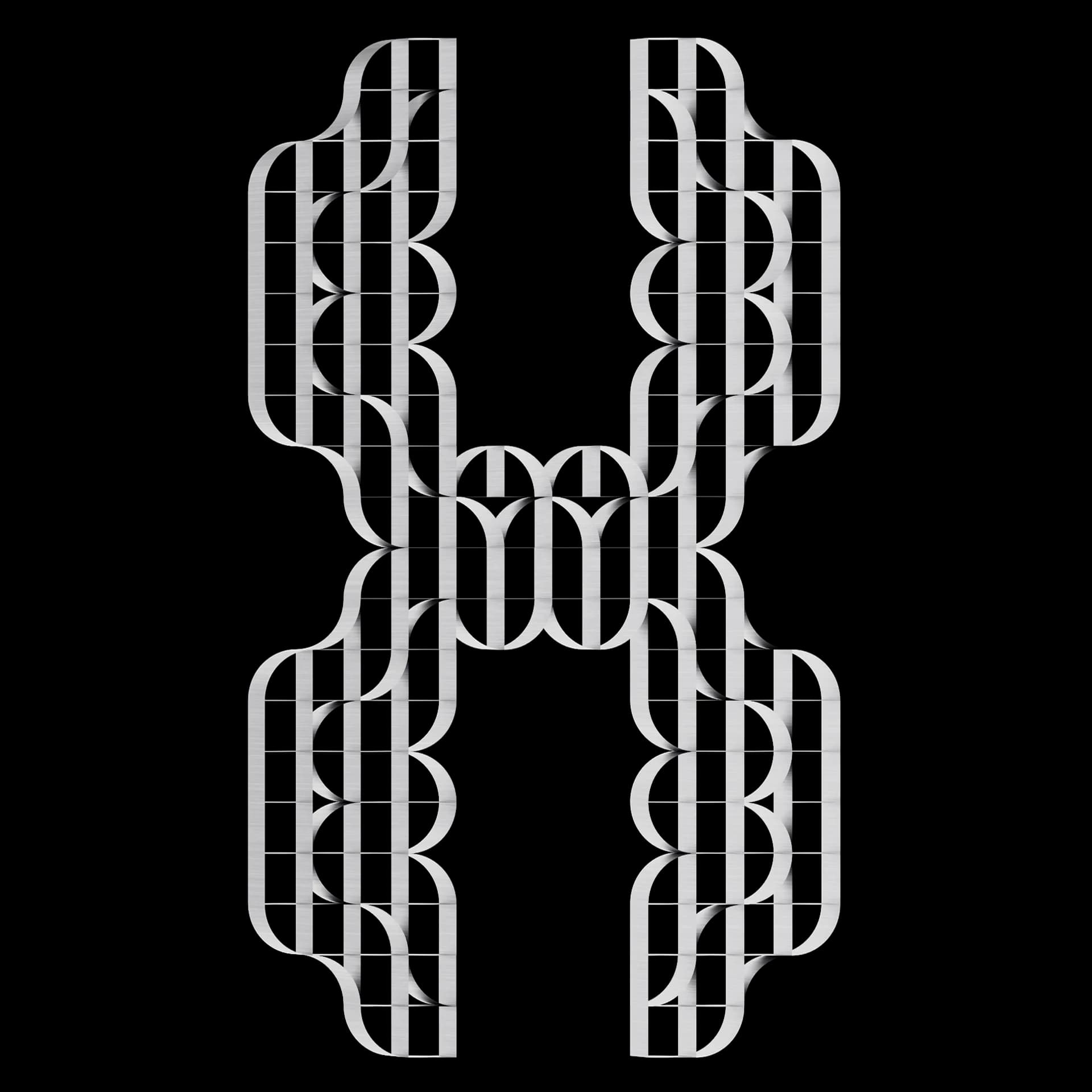
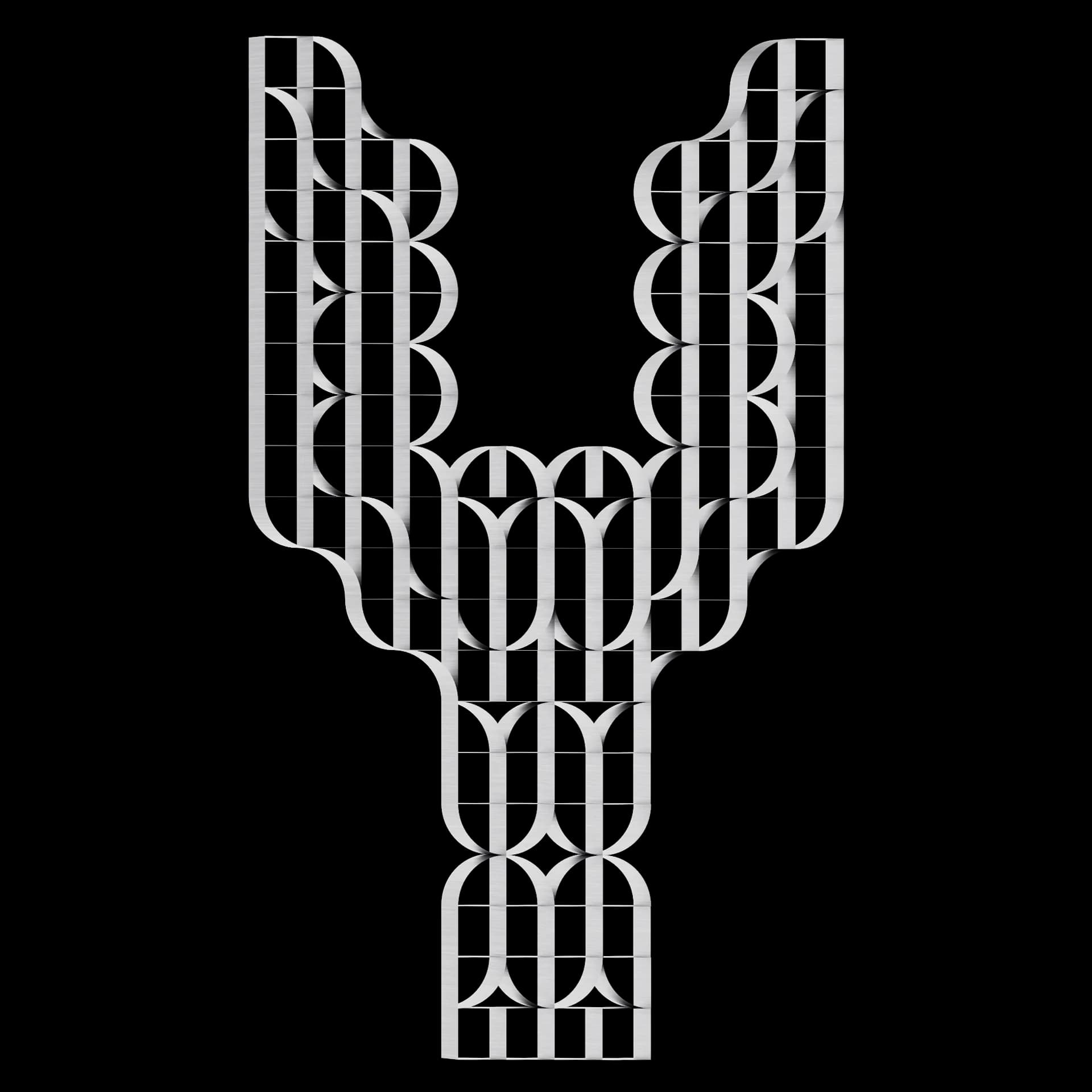
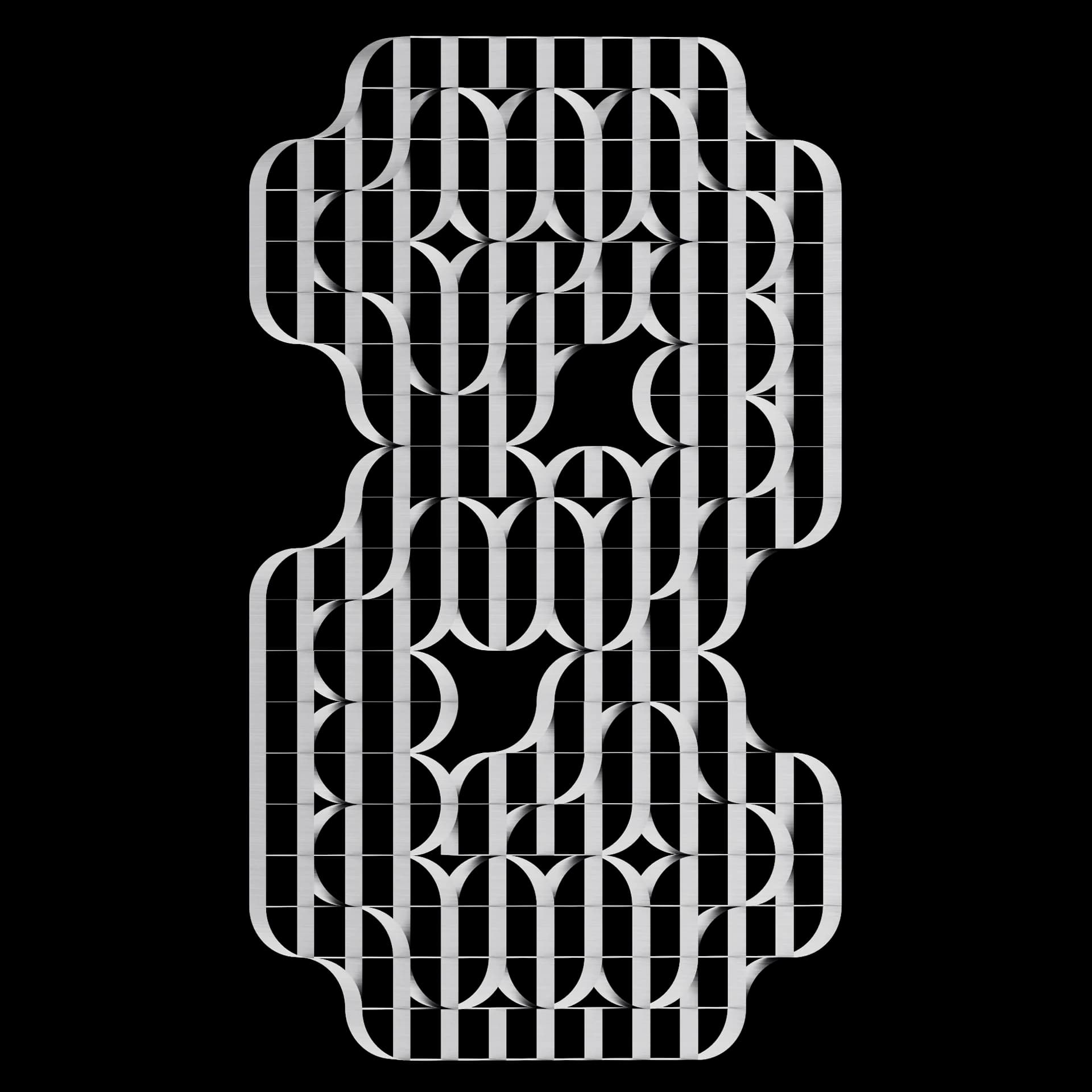
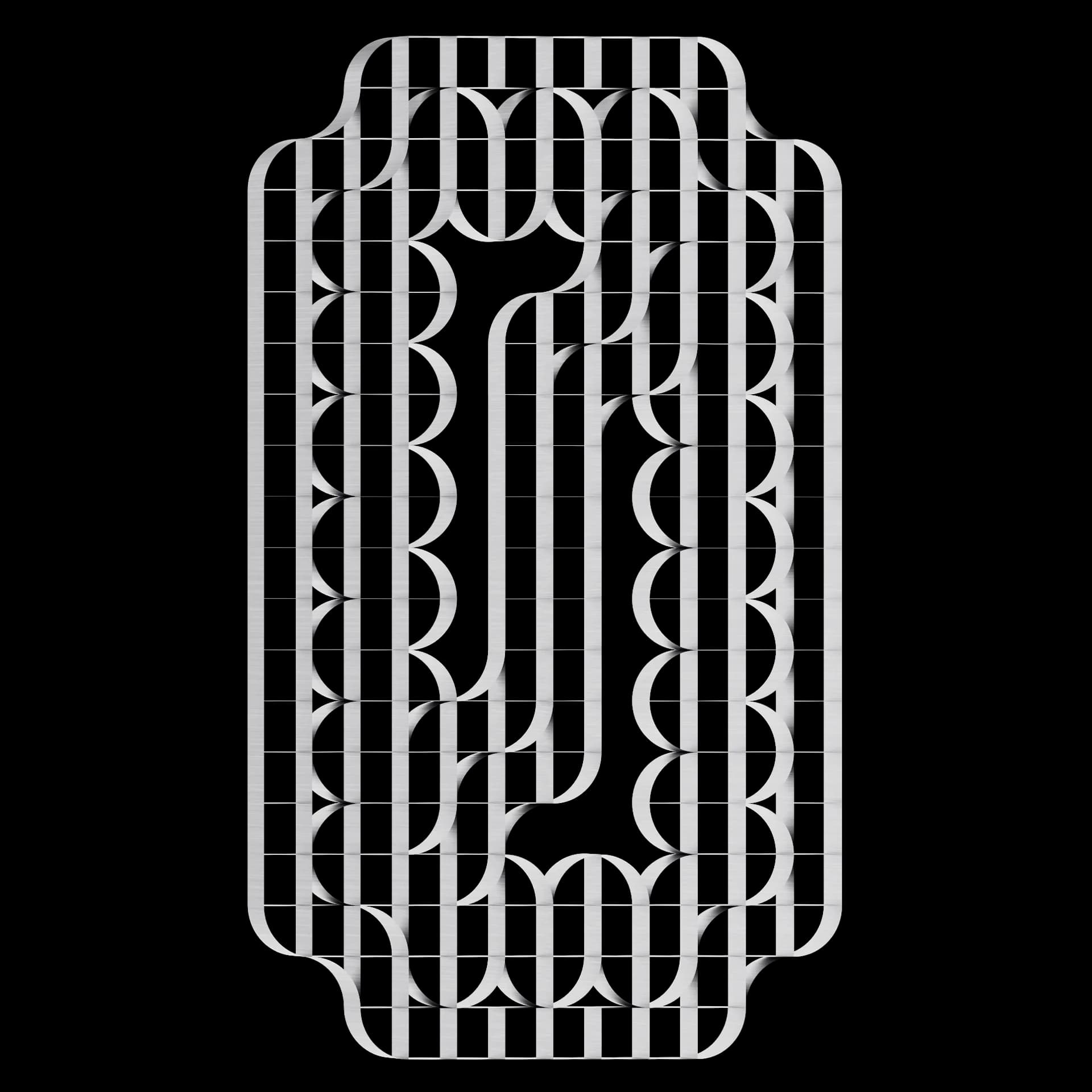
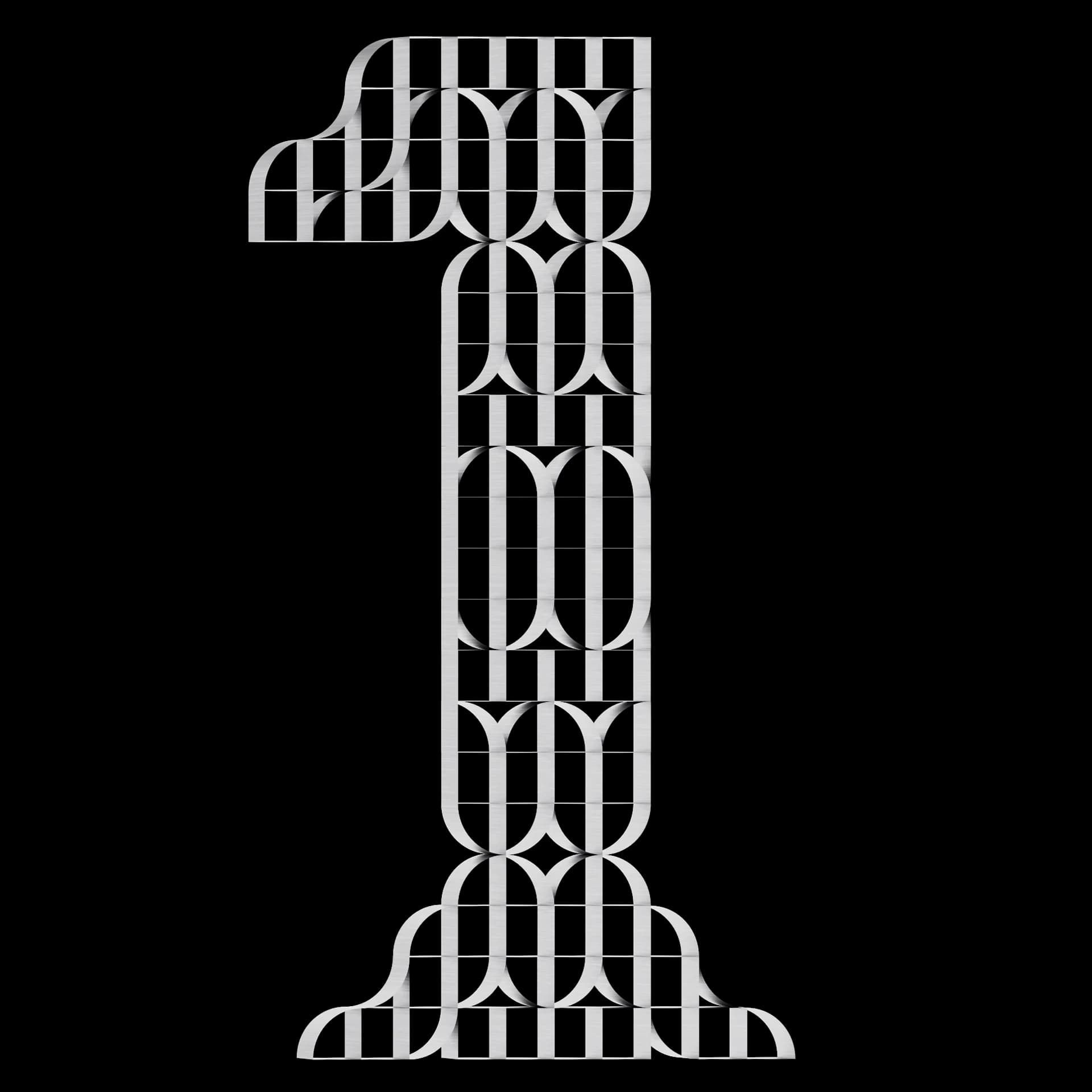
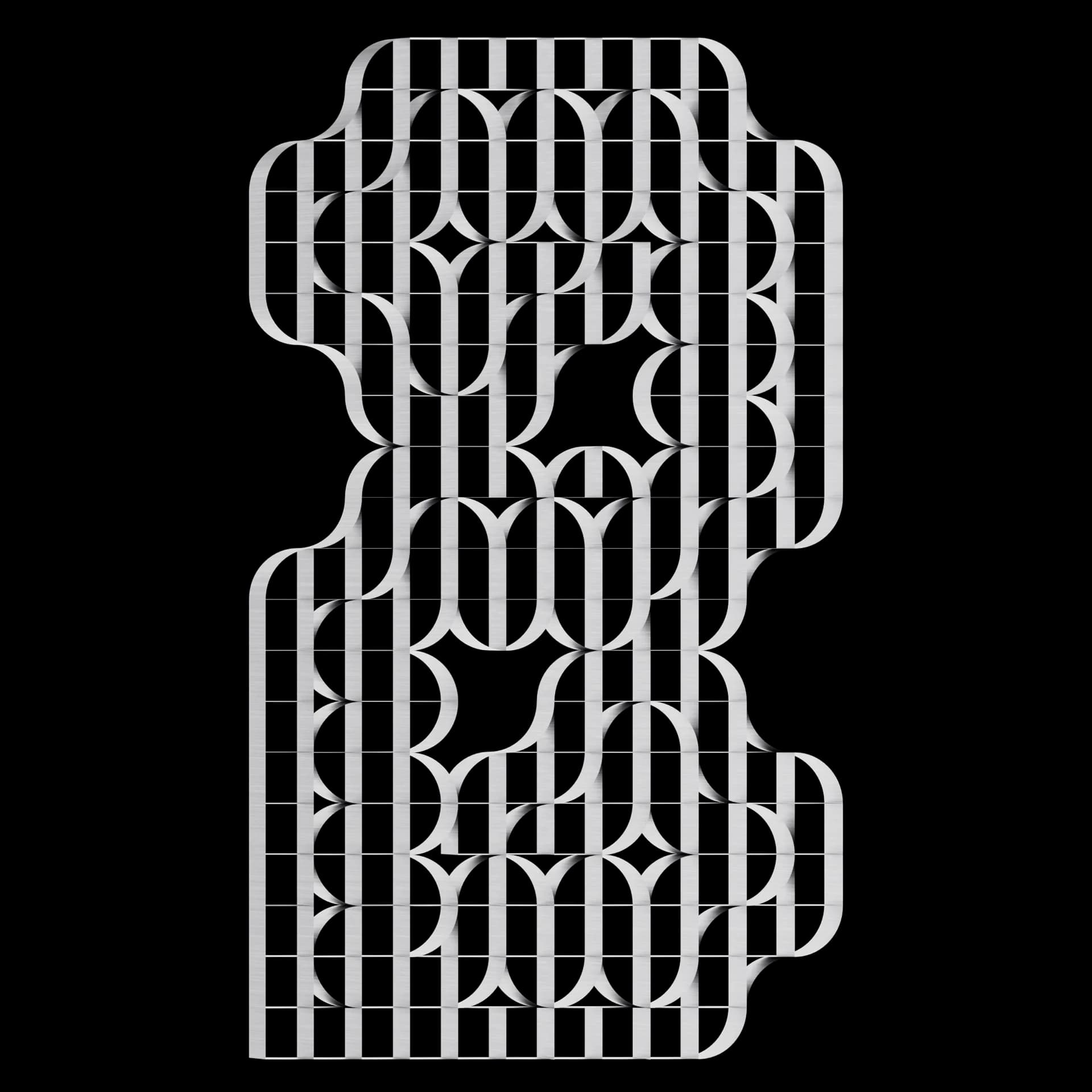
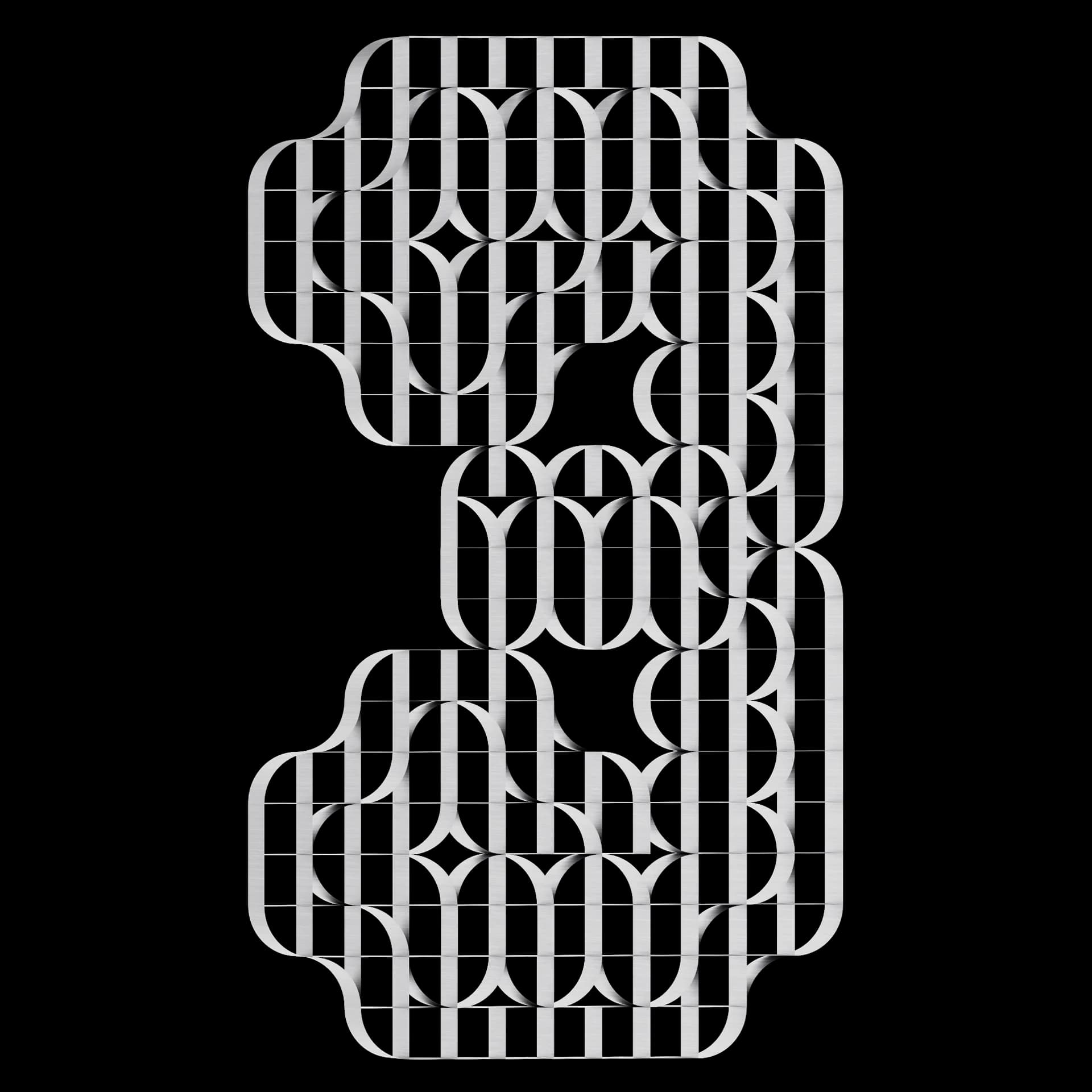
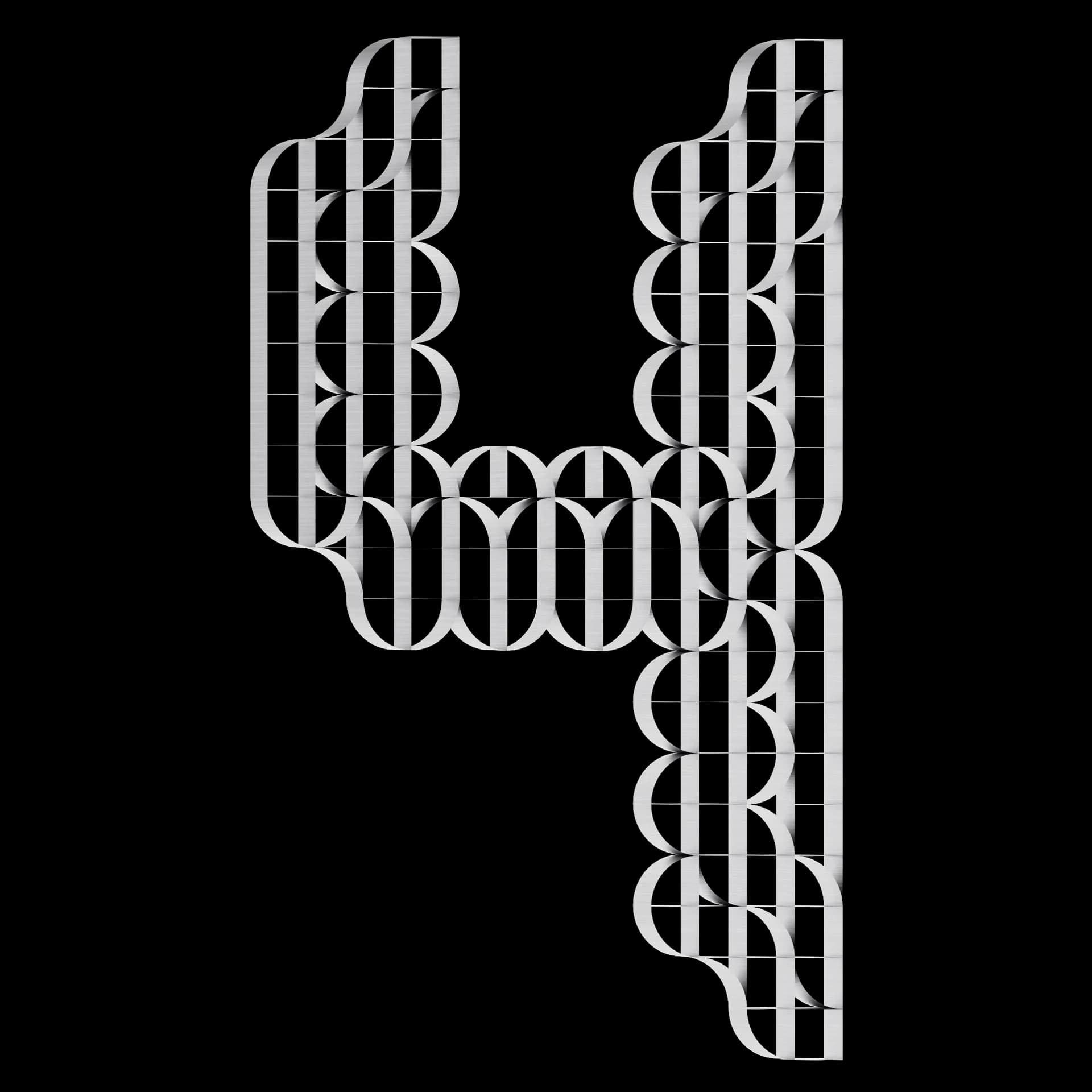
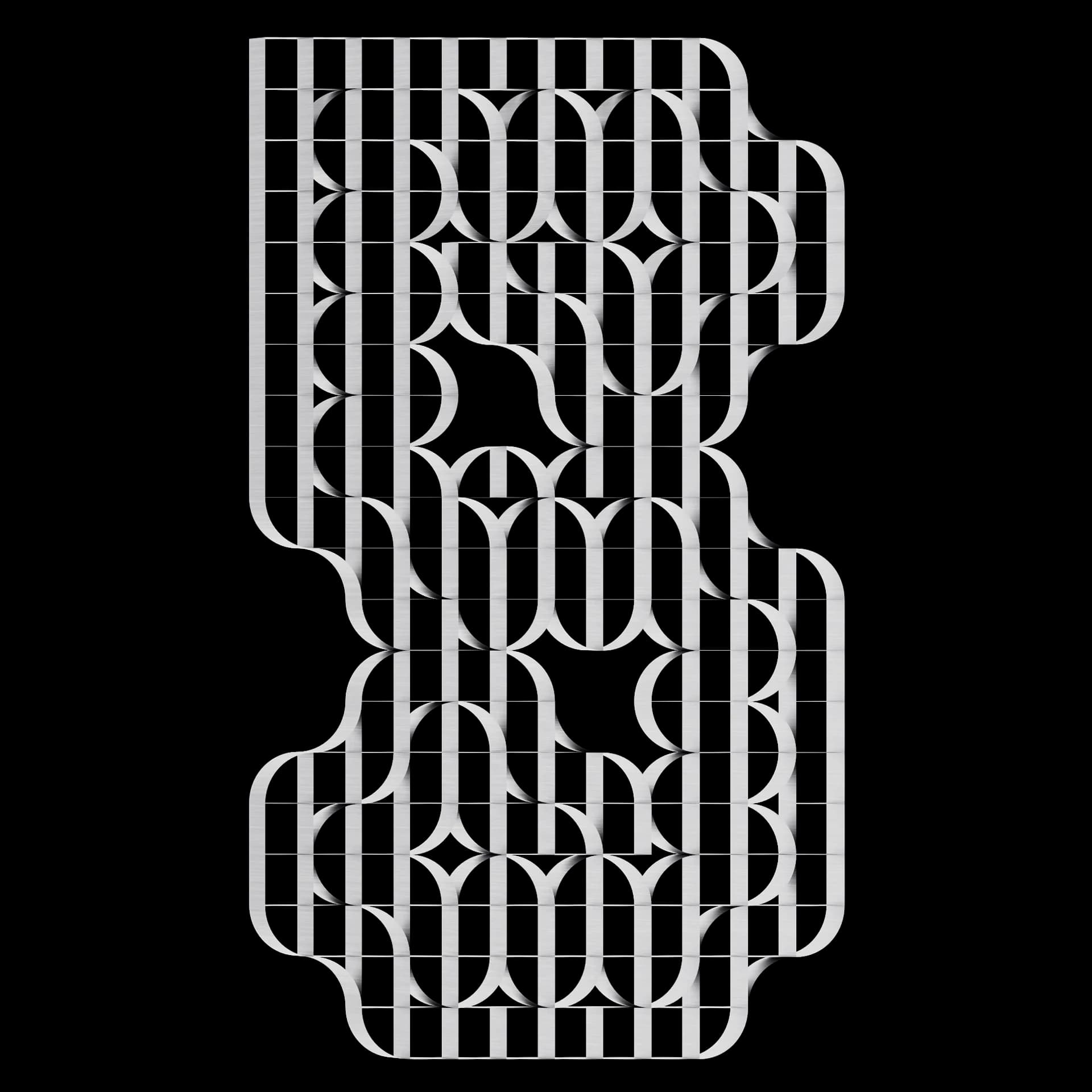
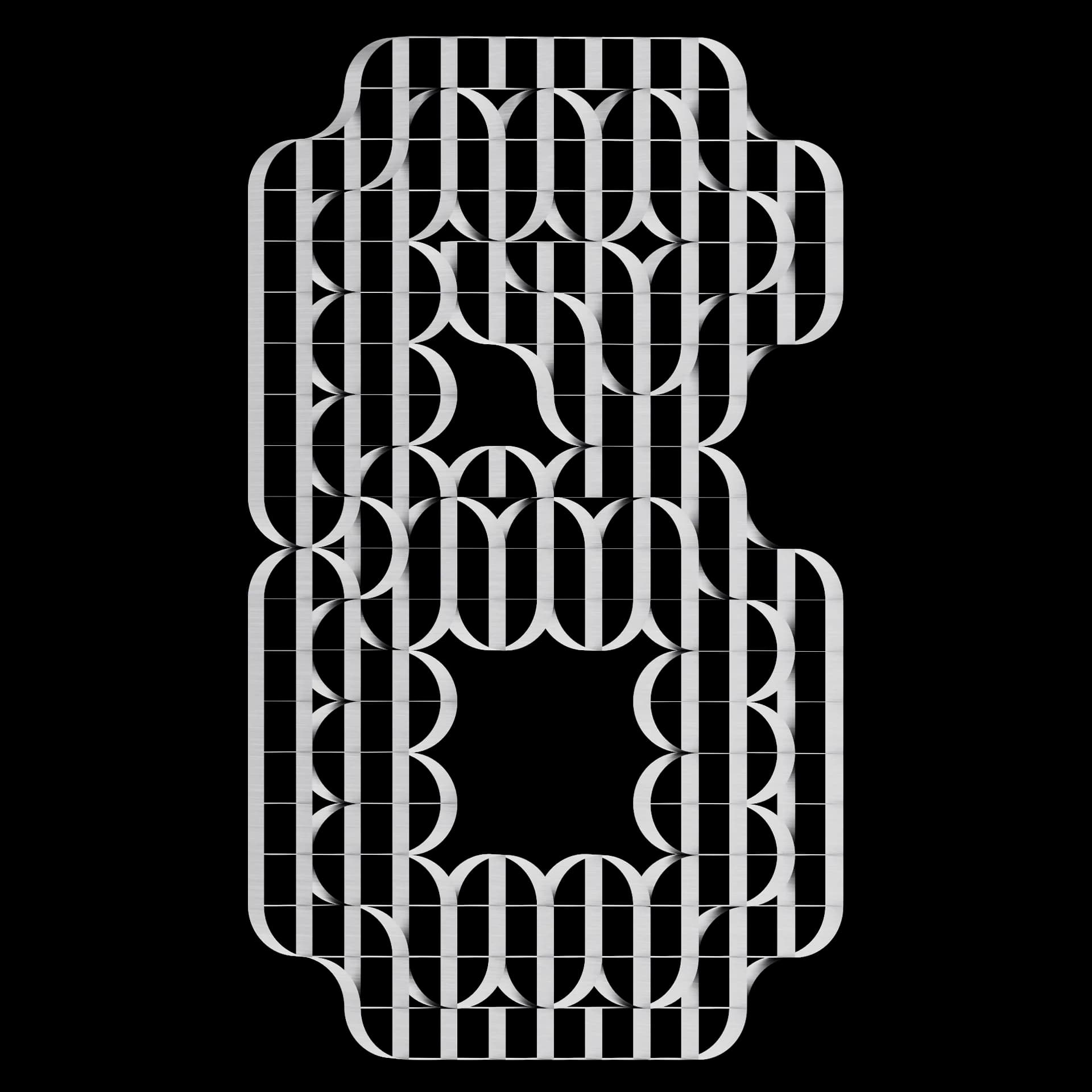
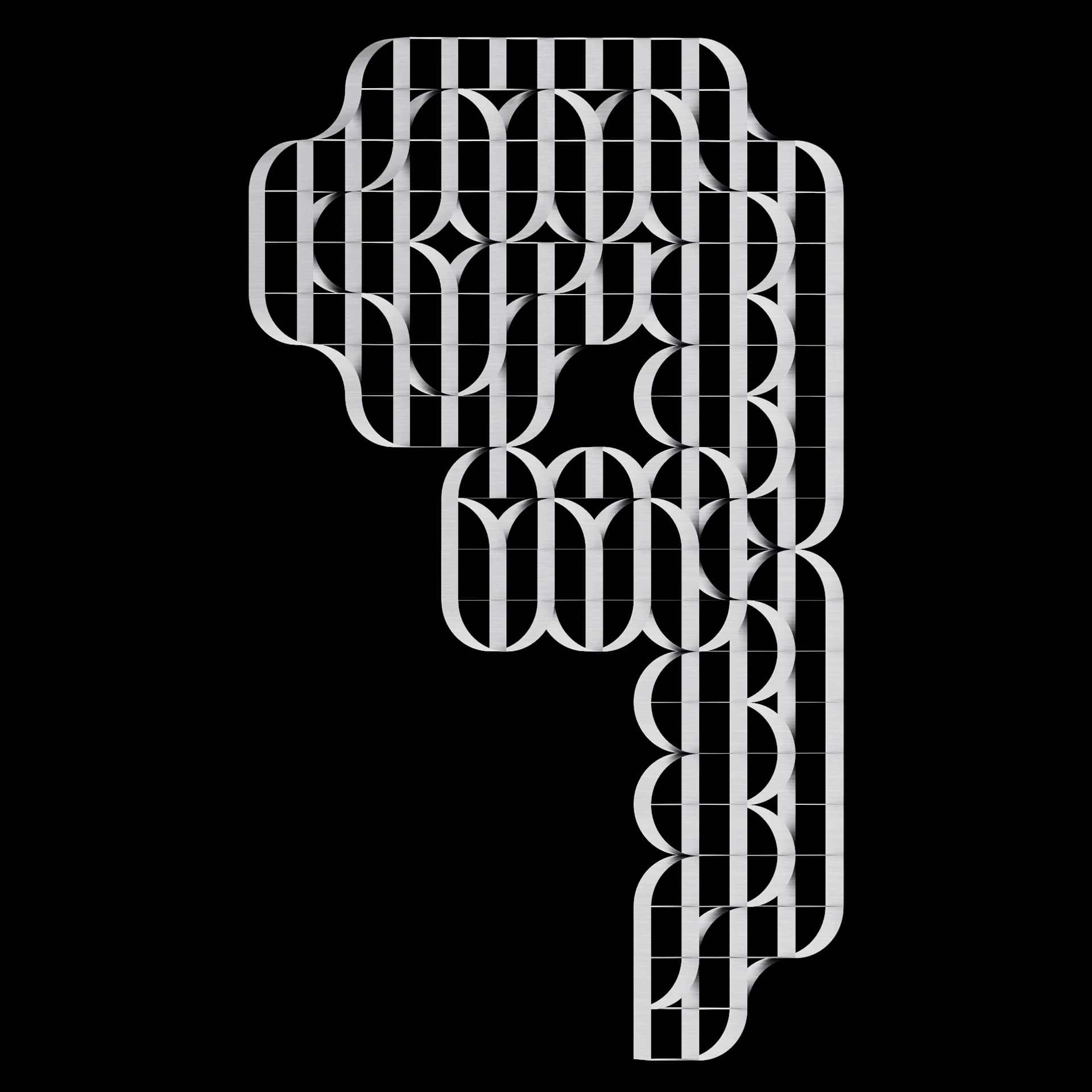
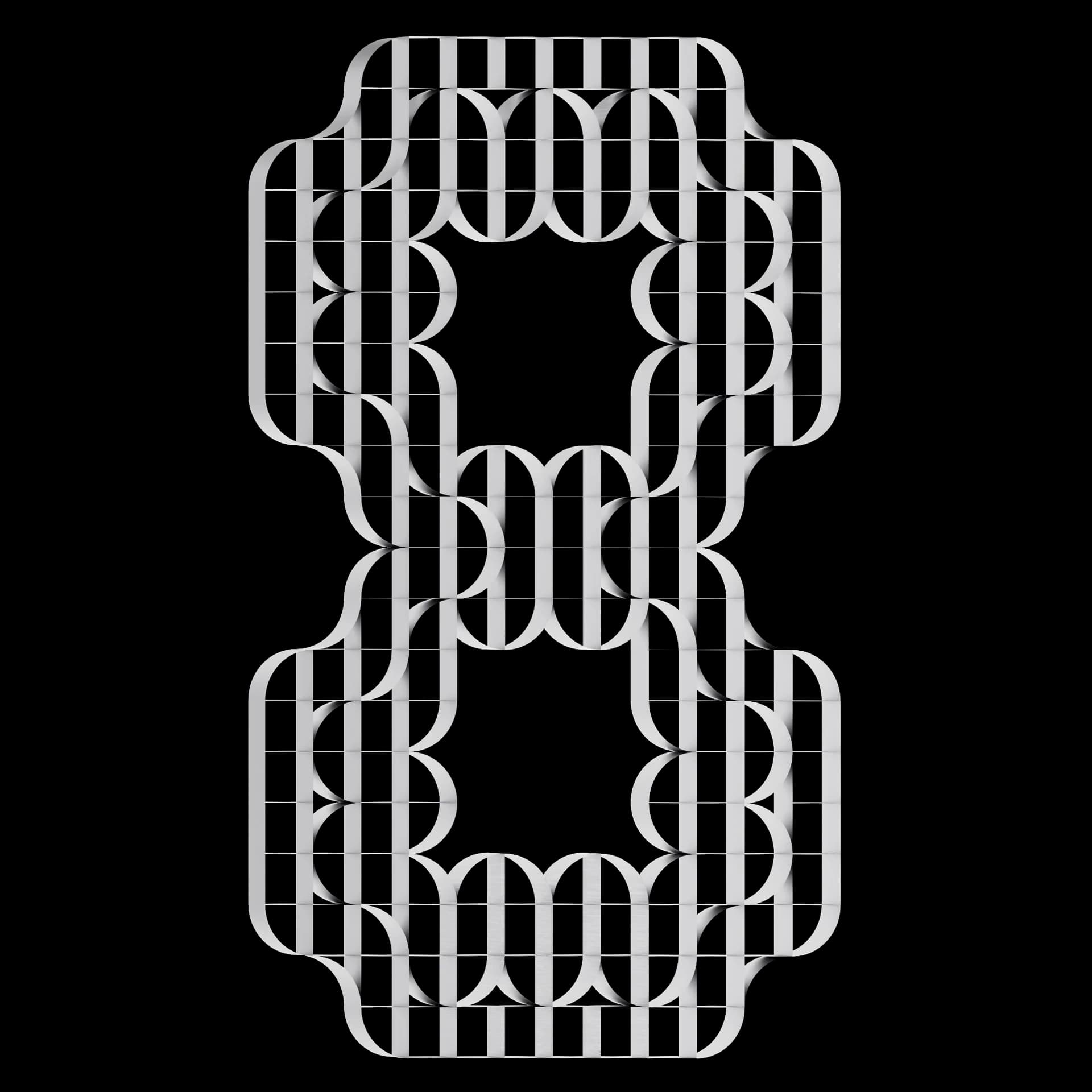
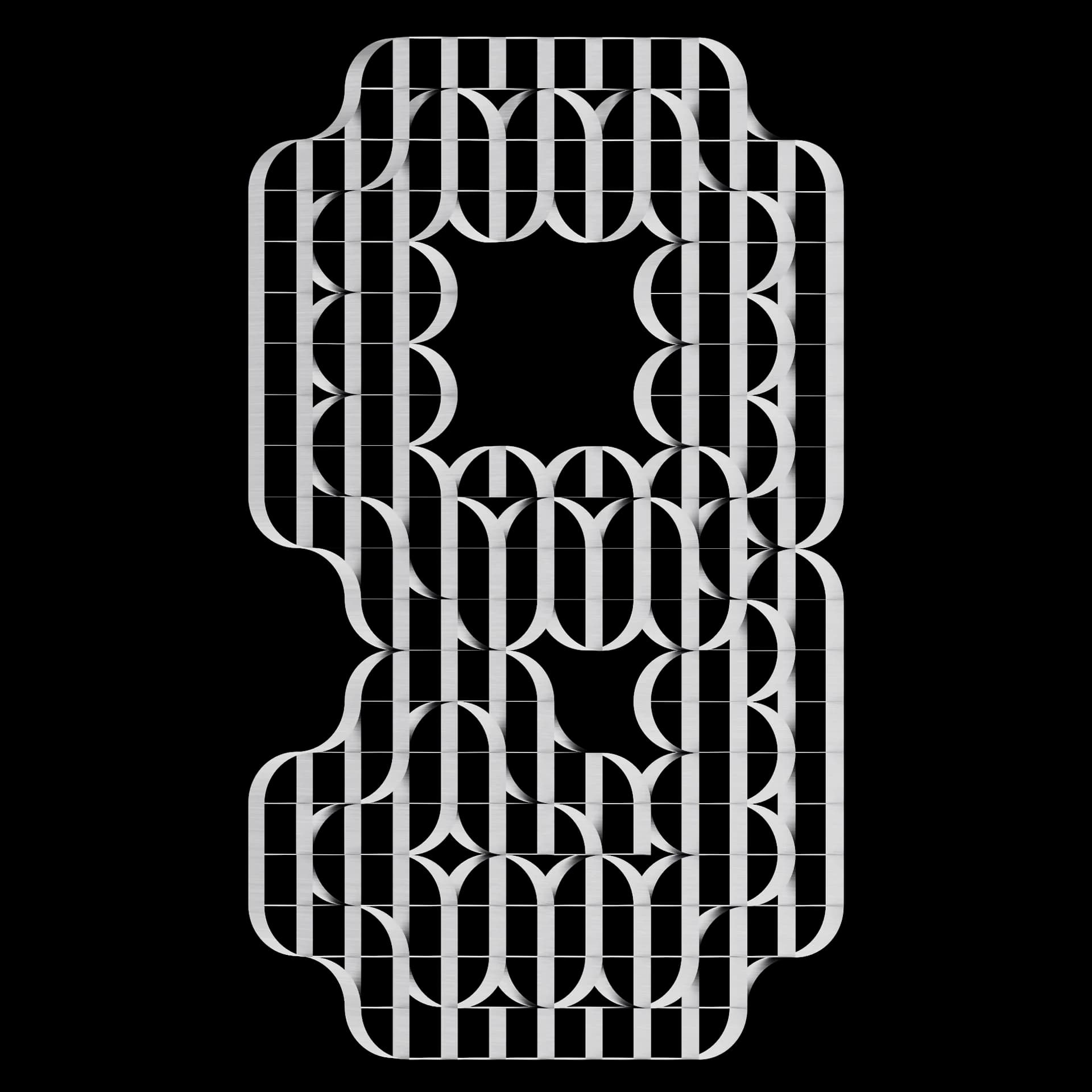
Ribbon Type is a modular alphabet in brushed metal, an application of the FORM system. A single module — vertical lines crossed by alternating elliptical arcs — repeats in a continuous field and the silhouette of each character masks it. The question of this modular typography experiment is whether a single unit can sustain a complete alphabet: 26 letters and the digits 0 to 9.
Visuals
Experiment
01Formal reference
The FORM system: a module that, repeated and masked, generates formal variety.
Concept
Modular typography as a systematic practice has direct precedents in the Bauhaus — Albers's stencil types, Bayer's Universal — and in the explorations of the international style. The FORM system operates on the same logic: a repeated element that generates formal variety through the mask. Hypothesis: a single module is enough for an entire alphabet. This exercise applies the system to the full Latin alphabet and digits 0–9, testing where the single module is sufficient and where it demands formal compromises.
System
The module consists of parallel vertical bands crossed by alternating elliptical arcs, with a fine grid of horizontal lines marking the pitch. It is drawn once as a vector in Illustrator and repeated in a regular field. The silhouette of each character cuts that field: the interior of the letter is always the same and the exterior is solid black. In Cinema 4D the vector is extruded into thin bands, so the crossings read as overlapping ribbons.
Process
Study of the FORM system → drawing the base module in Illustrator → repeating field → cutting with each character's silhouette → adjustment of corner terminations → extrusion in Cinema 4D → brushed metal and light in Redshift → render of the complete specimen.
Constants
Variables
Output
Specimen A–Z, 0–9: 36 individual renders, square format.